Termite treatment in Alella, protecting the original joinery
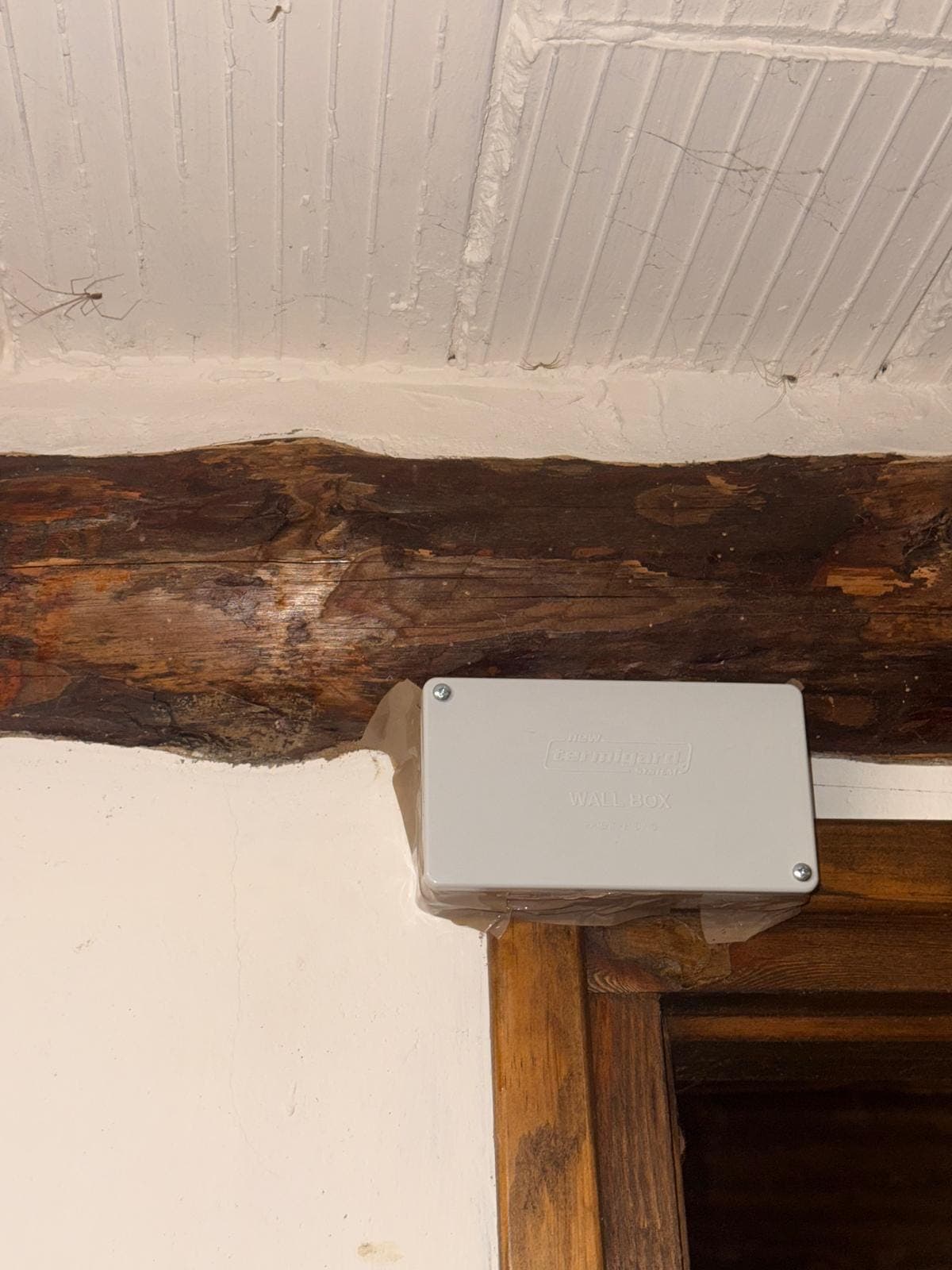
In Alella the wood that matters is in plain sight: galleries, porches and louvred shutters. We check it with audiotermes and plan the bait system without taking down a single piece.
Visual assessment visit included, at no cost and with no obligation. The technical study with audiotermes, which confirms every point of damage, is quoted separately and you decide with the figure in front of you. We work Monday to Saturday.
Request your no-obligation visual inspection
We reply within 24 hours.
Send us your enquiry
We serve the provinces of Barcelona and Girona.
* Required fields
The galleries and shutters of an Alella house are original joinery that is hard to replace, and the subterranean termite attacks them from the ground without leaving a trace on the surface. The colony does not nest in the visible wood: it lives in the garden soil and climbs the wall to whatever it can eat. The activity is located with audiotermes, dismantling nothing, and the treatment relies on bait stations with TP8 biocide spread across the points with activity.
Termites in Alella, at a glance
Where
Alella, Maresme, province of Barcelona
Dominant pest
Subterranean termite (Reticulitermes)
Way in
Garden soil hard against the ground floor
What is hit first
Galleries, porches and louvred shutters
Method
Bait system with TP8 biocide, inside the house and in the garden
Real timescale
Station checks in regular cycles until the activity stops
Guarantee
3 years in writing, starting when the treatment ends and the certificate of colony elimination is issued, with an annual inspection included
In Alella the first wood at risk is not in the ceiling: it is the original joinery of the summer houses
Alella grew as a summer retreat for Barcelona families, and that era left grand houses with glazed galleries facing the sea, porches on timber posts and louvred shutters in every facade opening. That joinery was made from fine hardwoods in generous sections, and it is still in service. For a subterranean termite climbing up from the garden, the frame of a gallery or a sub-frame built into the wall is the first food within its reach.
The old town huddles around the church, with thick-walled houses between party walls, timber joist ceilings and ground floors that for generations served as wine cellar or farm store. That lower part holds the ground's damp at the base of the walls, and the colony finds a discreet bridge to sleepers, skirting boards and staircases. The symptom takes time to show because the affected wood is usually hidden behind plaster, limewash or furniture.
Up the hillside, in areas such as Mas Coll or Can Magarola, detached houses with a plot dominate: gardens under constant watering, pergolas, sheds and fences with timber posts driven into the ground. All of that keeps the soil damp all year round, which is exactly what a subterranean termite colony needs to thrive. Outdoor wood in contact with the ground acts as an outpost, and from there the activity closes in on the house.
Between the vineyards and the sea, Alella keeps a landscape of living ground: terraced fields, streams and soil that never fully dries out, not even in the height of August. In surroundings like these, the useful question is not whether there are termites in the municipality, but whether they have reached one particular piece of joinery. Listening with audiotermes answers that without dismantling galleries or shutters, and lets the treatment be decided with data in hand.
Where does damaged wood show up first in Alella?
Zone by zone, what was built, what wood sits inside and where the insect gets in. It is the reading our technicians make before deciding where the check starts.
Wood types and entry routes by zone in Alella.
Zone of Alella
Dominant construction
Wood present
Way in
First sign
the old town
Dominant constructionSummer houses by the church
Wood presentGalleries, louvred shutters and joists
Way inOld walls holding damp
First signTraces of soil on the skirting board
Mas Coll
Dominant constructionHillside detached houses with landscaped plots
Wood presentPergolas, porches and outdoor joinery
Way inPosts and sleepers driven into the ground
First signSoil stuck to the garden wood
Can Magarola
Dominant constructionHomes with gardens on old terraced fields
Wood presentDecking, fences and timber sheds
Way inWatering that keeps the ground damp
First signPost that snaps at ground level
Source: ERRADICAT technical criteria from own work in the province of Barcelona · retrieved on 4 September 2026.
Three signs that really tell you whether there is activity
You do not need to see an insect. These three are what we actually find when we reach a home, and all three can be checked without tools.
Mud tubes on a wall or skirting board
Mud tubes the width of a pencil climbing the wall, the skirting board or the inside of a wardrobe. They are the tunnel the subterranean termite builds to shield itself from light and dry air. If they are damp inside, there is activity right now.
Loose wings on the window sill, March to June
In spring the colony releases winged reproducers. They fly little, shed their wings quickly and pile up on a window sill or by a terrace door. Finding wings indoors means a mature colony nearby.
Wood that sounds hollow even though it looks whole
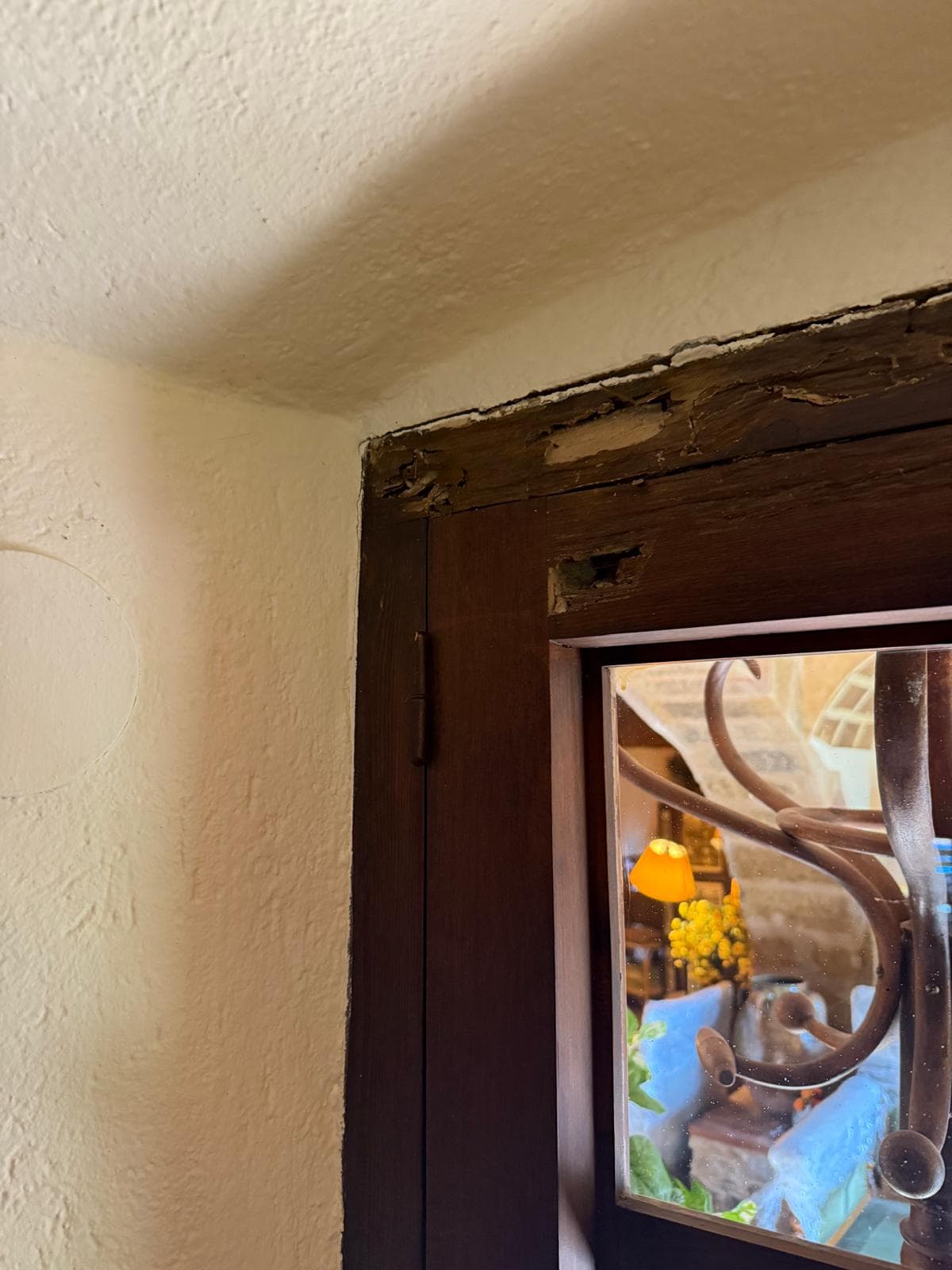
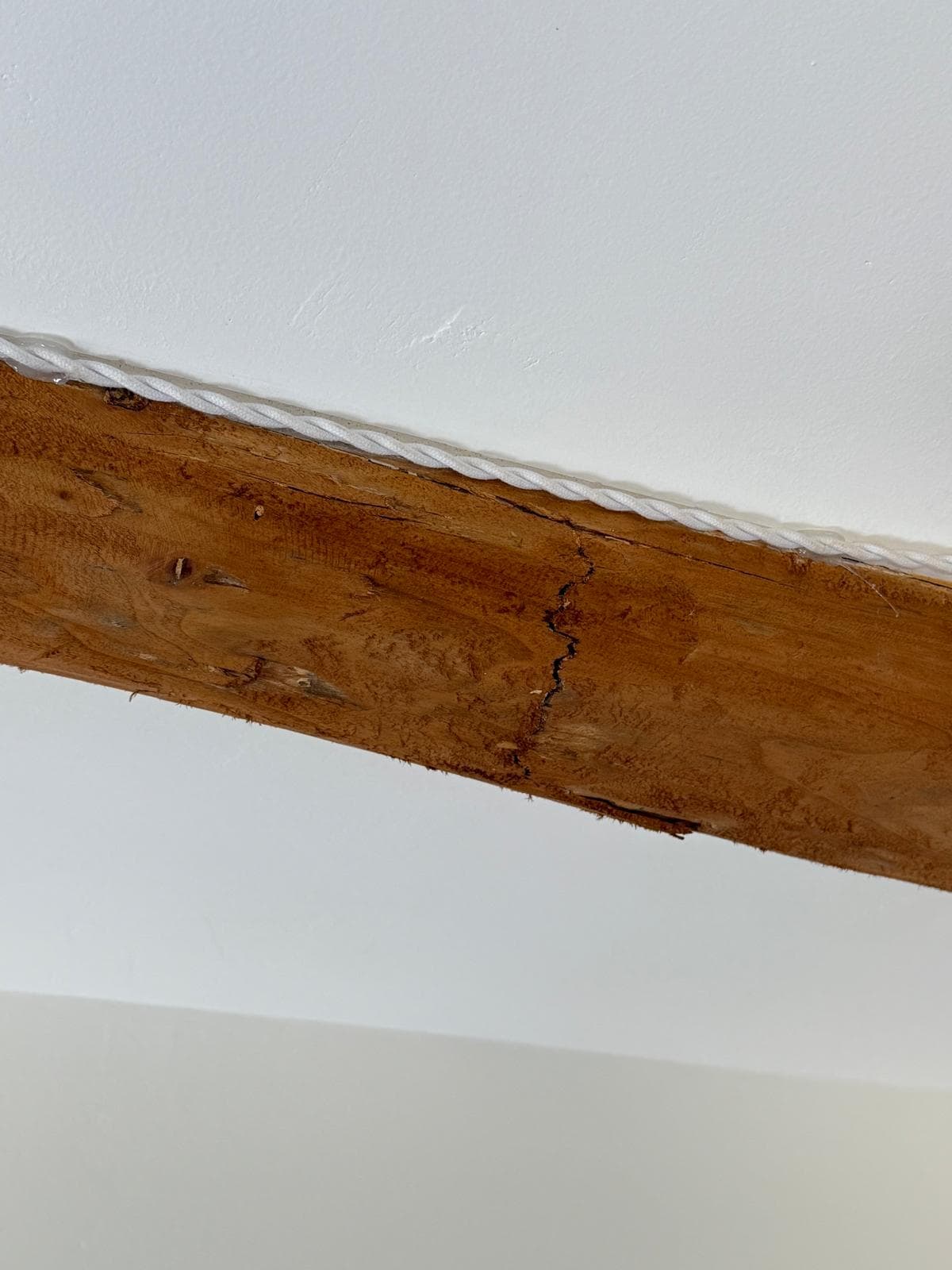
The termite eats the inside and spares a thin surface layer, so the element looks intact. Tap it with your knuckles and the sound changes from solid to hollow. On flooring it feels like a board that gives underfoot.
When do termites fly in Alella?
In Alella the swarm's wings appear as soon as spring warms the hillside ground, first in galleries and porches facing the sea and later inside the home.
Activity: from March to June · Peak: April and May.
Drywood termite Kalotermes flavicollis
Activity: from August to October · Peak: September.
Highest chance of seeing them
Active period
No flight expected
These dates are indicative windows. Flight depends on temperature and humidity, so each year it starts earlier or later: if you see winged insects outside these months, it is still a reason for an inspection.
Source: Technical literature of the timber sector · retrieved on 21 July 2026.
The bait system
We start by listening. The audiotermes amplifies the sound inside the wood and locates activity without lifting the floor or drilling anything, and from that comes a floor plan of the property with every point of damage marked.
Then the stations go in. We place indoor bait stations over the located sources and outdoor bait stations spread around the building's perimeter, loaded with bait for subterranean termites, a TP8-type biocide. The perimeter barrier is the part most providers skip, and it is the one that reaches the whole colony.
From there it is a matter of checks: every station is monitored, the bait replenished and the activity recorded until the nest stops responding. There is no shortcut, and anyone promising eradication in one visit is not talking about subterranean termites.
We publish the real timescales because they pre-qualify better than any promise. If someone wants a fix in one afternoon, better they know before calling.
Total duration:Station checks in regular cycles until the activity stops
1
Included
Visual assessment visit
A walk through the property with the naked eye to see what there is and how far it goes. The assessment visit is included, at no cost and with no obligation, and it is the starting point when the signs are unclear.
2
1 working day, with the figure agreed first
Technical study
Percussion sounding, listening with audiotermes, species identification and location of the access routes from the ground. We always recommend it: it confirms every point of damage and decides where each bait station must go. It is quoted separately, so you see it with the scope in front of you and it starts when you say yes.
3
A few days later
Report and floor plan
Floor-by-floor plan of the property with the issues found, the extent of the damage and the treatment proposal with your written quote. It is part of the technical study.
4
1 working day
System installation
Placement of the indoor bait stations over the sources and of the outdoor perimeter barrier around the building.
5
Every 6 to 8 weeks
Monitoring checks
Check of every station, bait replenishment and activity record. The frequency adjusts to what the system shows.
6
6 to 12 months
Eradication of the nest
The timescale depends on the size of the colony. It is the real range of the bait system and it cannot be compressed.
7
3 years
Guarantee
Three years from eradication, with the annual inspection included at no cost.
The visual assessment visit is included, at no cost and with no obligation: when the signs are unclear, it is the way to clear doubts. Even so, we always recommend the technical study with audiotermes, a floor plan of the issues found and a report, which is quoted separately: it confirms every point of damage, fixes where the treatment must act and from it comes your written quote, so you decide with the figure in front of you.
Source: ERRADICAT's intervention protocol · retrieved on 4 September 2026.
What we get asked in Alella
The louvred shutters on my Alella house are the originals. Can I find out whether they have termites without damaging them?
Yes, and in Alella that check is done without damaging the piece: listening with audiotermes detects activity inside the shutter and the frame that holds it. Nearby sub-frames and galleries are checked too, because the colony arrives by climbing through the masonry, not across the surface. If there is activity, it is located piece by piece and the spread of baits is decided from that list.
My Alella house has a concrete structure. Can termites really get in?
The concrete does not protect it: in Alella the subterranean termite goes after the wood the home has inside and around it, not the structure. Pergolas, fences, decking, doors and built-in wardrobes are within its reach, climbing from the ground through joints and service ducts. The useful check starts with the wood in contact with the garden soil and carries on to the joinery of the facade openings.
I live in Mas Coll, with a garden and automatic watering. Are my chances higher than in the village centre?
Yes, in one specific sense: the constant watering of a Mas Coll plot keeps the soil damp all year round, and that regularity is the condition that suits a subterranean termite colony best. The old town is not off the hook, because there the damp is held by the old walls. On a plot it pays to keep an eye on posts, sleepers and any wood driven into the ground.
Termites have been found in el Masnou, a few streets from my house in Alella. Should I be worried?
It is worth checking, without any drama: Alella and el Masnou run into each other with no physical break, and a subterranean termite colony spreads through the ground with no regard for municipal boundaries. Confirmed activity nearby does not mean your home is affected, but it does mean favourable conditions in the area. A check of the wood that touches the ground, listening at the doubtful points, settles the question without opening anything up.
Do we have to empty the Alella house or sleep elsewhere during the bait treatment?
No, and that is one of the reasons for working with baits in Alella: the stations go in during one visit, remain sealed and the house carries on being used as normal throughout the programme. The later checks are short visits to inspect every point and top up bait wherever the colony is feeding. The original galleries and shutters are not taken down at any stage.
How far do we travel from Alella?
In Alella we cover the whole municipal area, including the old town, Mas Coll and Can Magarola, and we also reach el Masnou, Teià and Tiana. We work Monday to Saturday, 7:30 to 22:00.
·If you are still unsure what you have, the visual assessment visit is included: no cost and no obligation.
·With signs in front of you, we recommend the technical study with audiotermes, floor plan and report: it confirms every point of damage, decides where each bait station goes and from it comes your written quote. It is quoted separately and starts when you say yes.
·During the bait programme our technicians return every 6 to 8 weeks, and those checks are part of the treatment.
·And if your property sits right on the edge of the area, we confirm it by phone in the same call.
Alella's houses run on into those of el Masnou with no visible break, and the home in this report is told in detail on the neighbouring municipality's page, from diagnosis to the system defined.
Alella commutes to Barcelona every day, and the capital's page gathers work from across the province, from the urban block to garden houses like those of this municipality.
The ROESP is the Spanish official register of pesticide establishments and services. It is the legal requirement for applying professional-use biocides, and not everyone offering these treatments meets it.
Technicians by trade, since November 2011
The technician who signs the reports, Sergi Casadevall Casas, has been treating termites and woodworm in Barcelona and Girona since November 2011, holding the biocide applicator licence. Visits are always made by our technicians, never by salespeople.
Written guarantee
The conditions and timescales go in the intervention report, signed. For termites, 3 years from the certificate of colony elimination, with the annual inspection included at no added cost.
The floor plan and the report stay with you
The technical study ends in a floor-by-floor plan of the property, with the issues found marked and the real extent of the damage. It is quoted separately and the document stays in the owner's hands, to work with the architect or to seek a second opinion with data on the table.
Barcelona and Girona under the same registration
Spanish Royal Decree 830/2010 establishes that a pest-control company's registration in one autonomous community is valid to work in the rest. That is why we cover both provinces with the same registration and the same team.
Content of this page reviewed by our technicians on 4 September 2026.
What happens when you call us from Alella
We ask what you have seen and where. If the signs are unclear, we book the visual assessment visit, which is included and takes little time. And when the signs are there, what we recommend is the technical study: audiotermes, a floor plan of the issues found and a report, with your written quote so you decide with the figure in front of you. If the wood is healthy, we tell you that too: you save yourself the treatment.
The visual assessment visit is included, at no cost and with no obligation: when the signs are unclear, it is the way to clear doubts. Even so, we always recommend the technical study with audiotermes, a floor plan of the issues found and a report, which is quoted separately: it confirms every point of damage, fixes where the treatment must act and from it comes your written quote, so you decide with the figure in front of you.