Woodworm and longhorn beetle treatment
- Company registered with the ROESP
- Technicians with a biocide applicator licence
- Written guarantee with every treatment
Woodworm is the larva of wood-boring beetles that devour timber from the inside and, since the larval cycle of the common furniture beetle (Anobium punctatum) lasts between 1 and 3 years hidden inside the beam, the damage advances long before the first exit holes appear. At ERRADICAT we locate the activity with AUDIOTERMES equipment and treat beams, furniture and structures with non-return valves, pressure injection and a double fumigation, with a 1 year written guarantee on the treated elements and follow-up. Free visual inspection in Barcelona and Girona, no obligation.
- Inspection with AUDIOTERMES equipment and probes at the beam ends
- Non-return valves, pressure injection and double fumigation
- Anoxia for furniture and pieces of value, without injecting the wood
Request your no-obligation visual inspection
We reply within 24 hours.
Send us your enquiry
We serve the provinces of Barcelona and Girona.
* Required fields
1-3 years
is how long the larval cycle of the common furniture beetle lasts hidden inside the timber before the first exit holes appear
Source: Higiene Ambiental (Anobium punctatum)
Up to 12 years
is how long the larval cycle of the house longhorn beetle can last, the wood borer that causes the most damage in Europe
Source: ITM Tratamientos de la Madera / Higiene Ambiental (Hylotrupes bajulus)
Up to 1 cm
is the size of the oval exit holes of the longhorn beetle, against the round 1-3 mm holes of the common furniture beetle
Source: Higiene Ambiental (Anobium punctatum / longhorn beetle)
18-25 mm
is the size of the adult house longhorn beetle, against the 3-5 mm of the common furniture beetle
Source: Higiene Ambiental / ITM Tratamientos de la Madera
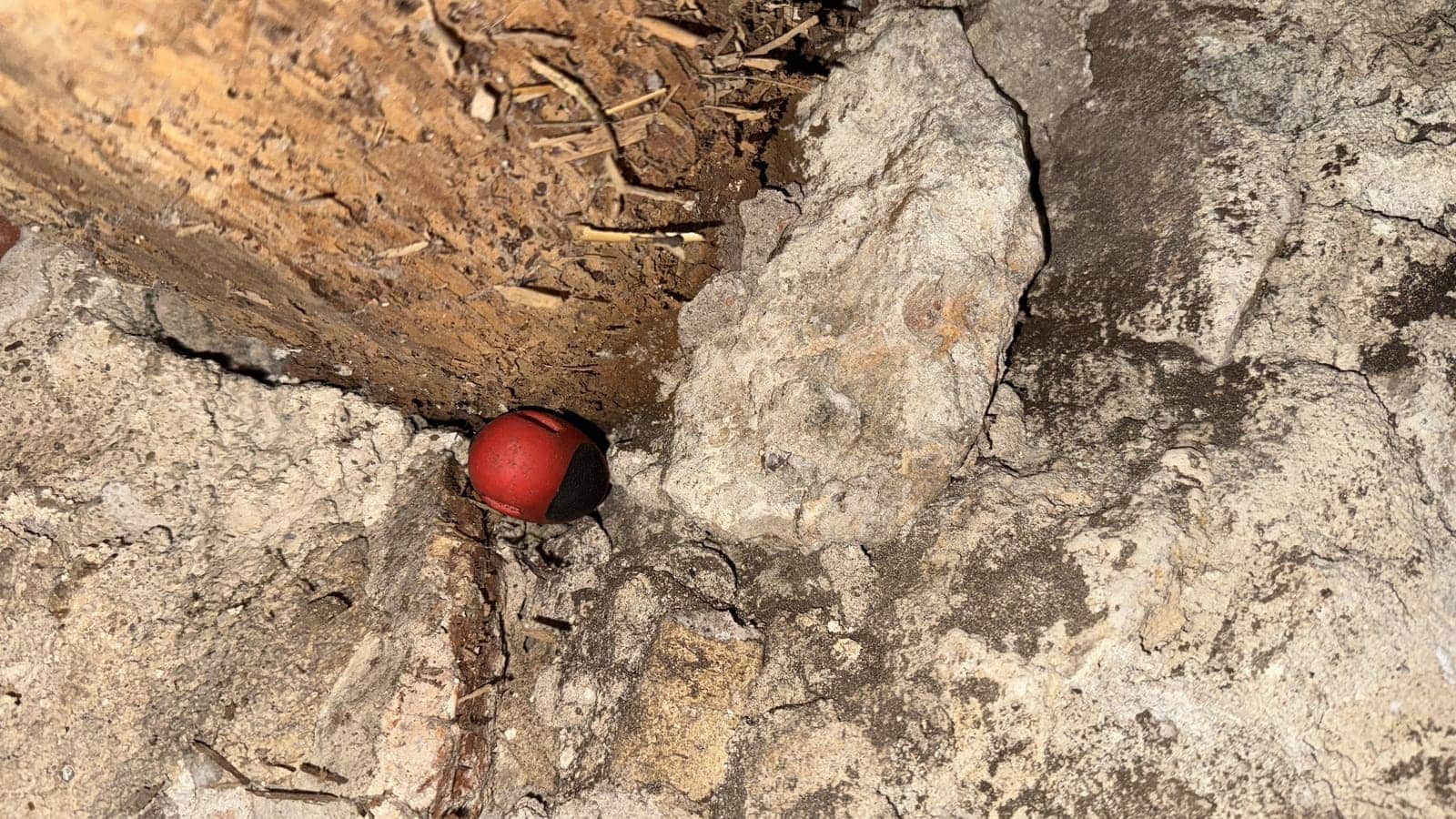
Damaged beam
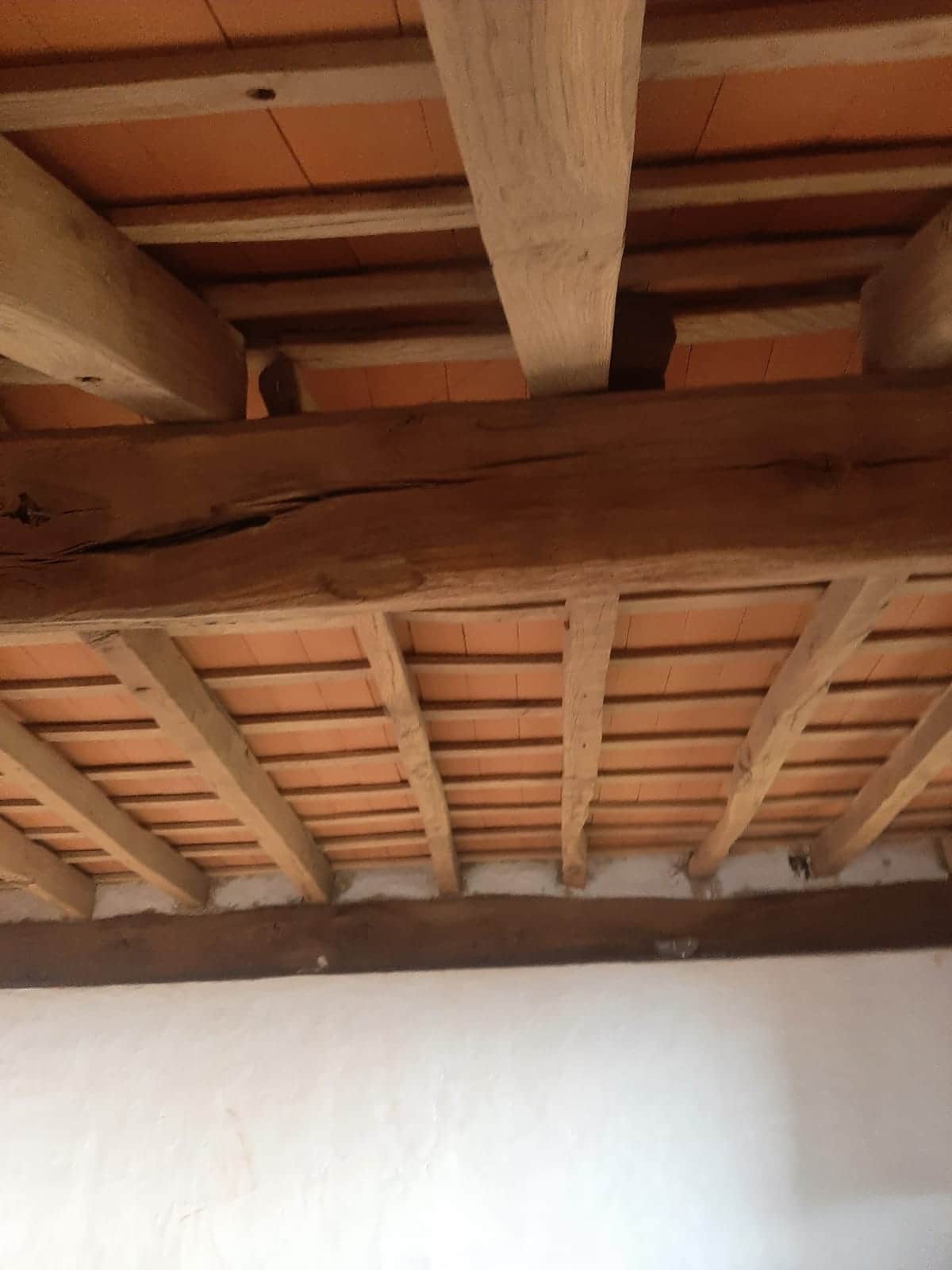
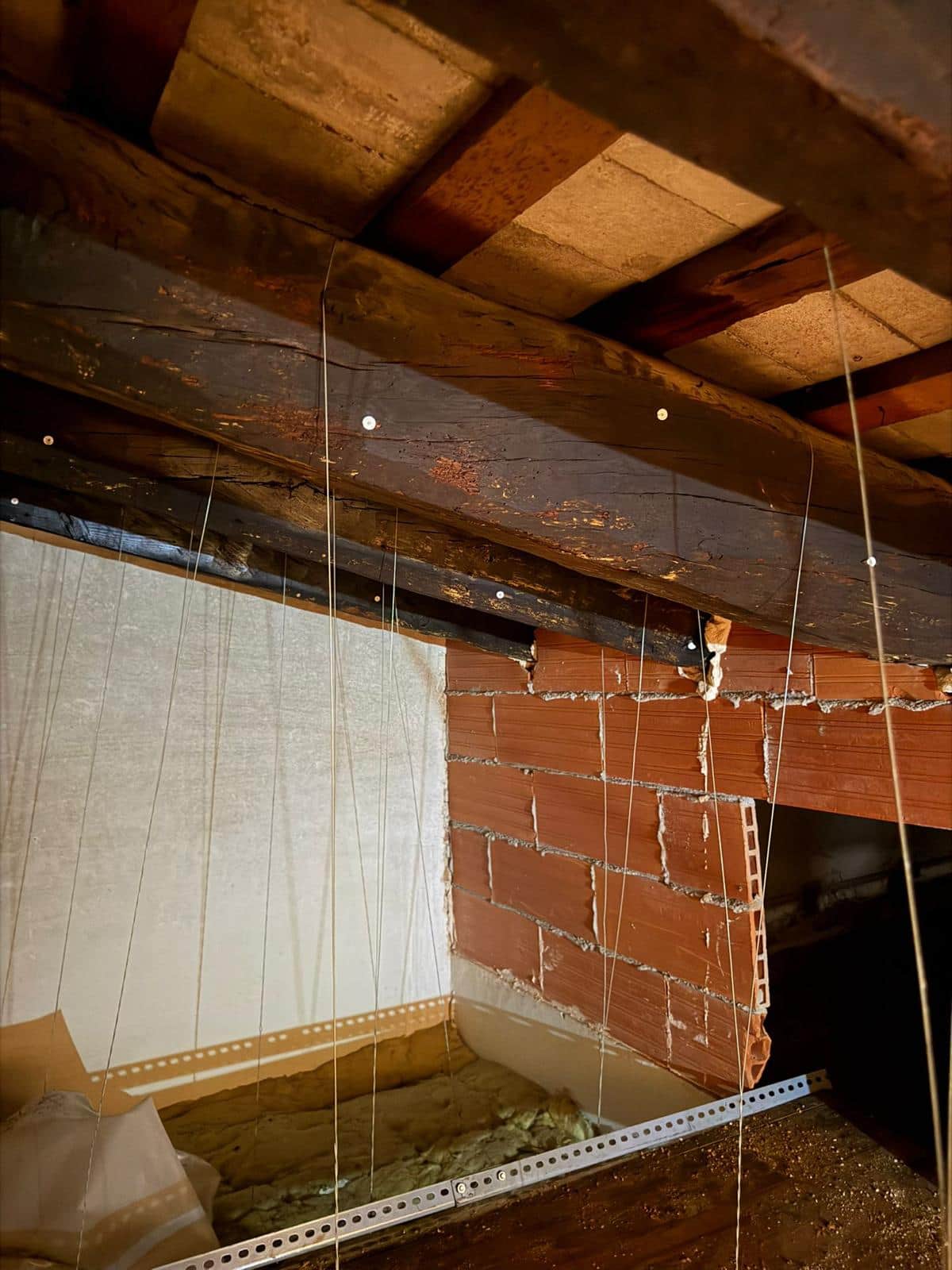
What is woodworm and why act as early as possible?
Woodworm is the larva of wood-boring beetles that feed on timber by tunnelling through it from the inside, and eliminating it requires professional injection and fumigation, not surface-level fixes. Acting early is key: the larval cycle of the common furniture beetle (Anobium punctatum) usually lasts between 1 and 3 years, so the internal damage happens long before the first exit holes appear.
At ERRADICAT we treat common woodworm, the longhorn beetle (Hylotrupes bajulus) and the powderpost beetle (Lyctus brunneus) in beams, furniture, chairs and timber structures across Barcelona and Girona. At the slightest sign of frass, holes or timber that sounds hollow, the best course is a technical inspection to establish the real extent of the problem before the structural damage advances.
Woodworm or termite?
They are not the same. Woodworm leaves round exit holes and small mounds of frass on the surface of the timber; termites eat it from the inside, leaving almost no visible trace until advanced stages. The treatment is different in each case, and during the inspection with AUDIOTERMES equipment we identify it with certainty.
See the termite treatmentIs the timber varnished?
If the piece is varnished, the product cannot penetrate properly: it must be stripped first. That is why we link the woodworm treatment with our stripping and cleaning service as an essential prior step for furniture, coffered ceilings and finished joinery.
See stripping and cleaningWood-boring species and their evidence
The name woodworm covers several beetles that bore into timber. Recognising which one you are dealing with, and the signs it leaves, helps treat only what is affected and with the right method.
Common furniture beetle (Anobium punctatum)
The most common beetle in furniture, chairs and beams: the adult measures about 3-5 mm and leaves small round exit holes, 1 to 3 mm, with fine frass. Its larval cycle usually lasts between 1 and 3 years hidden inside the timber.
House longhorn beetle (Hylotrupes bajulus)
Much larger, 18 to 25 mm as an adult, with a larval cycle of 3-4 years that can stretch to 12. It leaves oval exit holes of up to 1 cm with coarser frass, the larvae can even be heard gnawing the timber, and it is the wood borer that causes the most damage in Europe on coniferous sapwood.
Powderpost beetle (Lyctus brunneus)
It particularly attacks starch-rich hardwoods, such as parquet floors and furniture, and leaves the timber reduced to a very fine powder. We also treat it by injection and fumigation within our protocol.
How to detect woodworm: warning signs
If you notice any of these signs, a professional inspection is advisable as soon as possible: the internal damage is usually more advanced than it looks from the outside.
What you are actually seeing
| What you see | What it usually means | Where it appears | Urgency |
|---|---|---|---|
| Beam that sounds hollow or gives way when pressed | Advanced internal loss of section, from termites or longhorn beetle | Beam ends, floor structures and girders | Immediate inspection |
| Round holes of 1 to 3 mm with fine frass | Common woodworm (Anobium punctatum) with adults emerging | Furniture, chairs, coffered ceilings and beams | Inspection recommended |
| Oval holes of up to 1 cm with coarse frass | House longhorn beetle (Hylotrupes bajulus), the one causing the most structural damage | Softwood sapwood, beams and timber frames | Immediate inspection |
| Gnawing sound inside the wood | Longhorn beetle larva active inside the piece | Beams and timber frames, easier to hear during the warm hours | Inspection recommended |
| Doors or windows that no longer fit properly | Deformation of the frame or the casing, possible hidden damage | Wooden joinery, especially with damp nearby | Watch and re-check |
Source: Technical literature of the timber sector · retrieved on 21 July 2026.
How we eliminate woodworm
Our protocol combines precise detection with pressure injection and a double fumigation, to reach the internal galleries where the larvae hide rather than staying on the surface. We work with wood preservatives of the TP8 biocide category, authorised by the Spanish Ministry of Health in accordance with Regulation (EU) 528/2012 and applied by technicians holding a biocide applicator licence.
Advice and inspection
We locate the wood borers' activity with AUDIOTERMES equipment, review the exteriors and make a probe at the beam ends to learn the real condition of the timber. If the piece is varnished, it must be stripped first so the product can penetrate, and we link that with our stripping and cleaning service.
Tailored solution
We fit non-return valves along the beam and inject the product under pressure so it reaches the internal galleries where the larvae hide. We then apply the double fumigation and clean the whole room, vacuuming and mopping, so no chemical residue is left behind.
Protection and follow-up
You must stay out of the property for 24 to 48 hours and ventilate on your return; if the treatment is done on the upper floor and you live on the lower one you do not need to leave the house, but you cannot go up to the treated area. Every intervention is delivered with a 1 year written guarantee on the treated elements and follow-up to verify the timber remains protected.
Injection, double fumigation and anoxia: what we use and when
Against woodworm there is no single method, there are three decisions: where the larva is, what the piece is, and whether the timber has a finish. The treatment follows from that, which is why the inspection with AUDIOTERMES equipment always comes before the quote.
In beams and structural timber the treatment is curative, by injection. Entry points are drilled at regular intervals, non-return valves are fitted and the preservative is injected under pressure until it reaches the internal galleries, which is where the larva lives. This is followed by the double fumigation over the whole surface and a complete clean of the room, vacuuming and mopping.
For furniture, religious carvings, dismountable coffered ceilings and pieces of value there is the alternative of anoxia: the piece is sealed in an oxygen-free atmosphere for several weeks, until the insect's cycle is complete. Nothing is injected into the timber and the finish is not altered, so it is the sensible route when the piece has heritage or sentimental value.
Common woodworm in a beam
Injection with non-return valves plus a double fumigation. It is the most common case in timber-joist floor structures and in beam ends embedded in the wall.
House longhorn beetle
Same protocol, but with a denser injection grid: the longhorn beetle digs much larger galleries and the product has to reach them all. It is the wood borer that causes the greatest structural damage in Europe.
Furniture or piece of value
Anoxia, or very targeted injection if the piece allows it. If there is varnish or lacquer, it must be stripped first: on a sealed finish the product stays on the surface.
Parquet and hardwoods
The powderpost beetle (Lyctus brunneus) attacks starch-rich timbers and leaves the piece reduced to a very fine powder. It is treated by injection and fumigation within the same protocol.
Real treatment timeline
Total duration:One working day, plus a 24 to 48 hour wait before returning
First visit
Inspection with AUDIOTERMES
Location of wood-boring insect activity with AUDIOTERMES equipment, review of the exteriors and probing at the beam ends to establish the real condition of the timber.
Before treating
Prior stripping if the wood is varnished
If the piece has varnish or paint, the protector does not penetrate: it has to be stripped first. This is done by blasting with mild abrasives at low pressure, or by any other method the client requests.
Treatment day
Non-return valves and pressure injection
Non-return valves are fitted along the beam and the protector is injected under pressure, to reach the internal galleries where the larvae hide.
The same day, after the injection
Double fumigation and cleaning of the room
Two coats of fumigation over the entire wood surface and a complete clean of the room, with vacuuming and mopping, so that no product residue is left behind.
24 to 48 hours
Waiting period and ventilation
You must stay out of the property and ventilate it when you return. If only the upper floor is treated and you live on the lower one, there is no need to leave, but you cannot go up to the treated area.
After the treatment
Written guarantee and follow-up
Every intervention comes with a 1 year written guarantee on the treated elements and with follow-up to verify that the wood remains protected and free of activity.
The holes that already exist do not disappear: they are the exit holes of larvae from earlier cycles. What the follow-up checks is that no new holes or fresh frass appear.
Source: ERRADICAT intervention protocol, technical team · retrieved on 21 July 2026.
Why choose ERRADICAT?
What sets us apart on every job
Technical inspection with AUDIOTERMES equipment
We locate the wood borers' activity with AUDIOTERMES equipment, an inspection of the exteriors and probes at the beam ends to learn the real condition of the timber before treating.
Prior stripping if there is varnish
When the piece is varnished, we strip it first so the product penetrates the timber. We link this with our stripping and cleaning service as an essential prior step.
Non-return valves and pressure injection
We fit non-return valves along the beam and inject the product under pressure until it reaches the internal galleries where the larvae hide.
Double fumigation and final clean
We apply two passes of fumigation with the protective product and clean the whole room (vacuuming and mopping) so no chemical residue is left after the treatment.
Authorised TP8 biocides
We use wood preservatives of the TP8 category authorised by the Spanish Ministry of Health, applied by technicians holding a biocide applicator licence in accordance with Regulation (EU) 528/2012.
Written guarantee and follow-up
Every treatment is delivered with a 1 year written guarantee on the treated elements and follow-up, to verify that the timber remains protected and free of activity.
Who you are dealing with
A woodworm treatment takes place inside your home and on a structure that holds up the building. It is worth knowing who comes in and with what backing.
Company registered with the ROESP
ERRADICAT is registered with the Official Register of Pesticide Establishments and Services (ROESP), the legal requirement for applying professional-use biocides in Catalonia.
Technicians with a biocide applicator licence
Injections and fumigations are carried out by technicians holding a valid licence. The timber treatment is never subcontracted.
Technicians with 15 years of experience
The technicians who lead our treatments have been working with timber since 2011: 15 years of woodworm, longhorn beetle and termites in Barcelona and Girona. The company is more recent than their experience, and we say so plainly.
Authorised TP8 wood preservatives
Biocides of the TP8 category authorised by the Spanish Ministry of Health in accordance with Regulation (EU) 528/2012, with the safety data sheet available to the client.
Written guarantee
Every intervention is closed with a signed document stating the scope treated and the 1 year guarantee on the treated elements, not with a verbal promise.
Stripping and treatment by the same team
When there is varnish or paint, we do the prior stripping ourselves. That way nobody argues afterwards about whether the product penetrated the timber or not.
Local experts in timber treatment
We work across the whole of the provinces of Barcelona and Girona: homes with timber structures, farmhouses and rural houses, homeowners' associations, and furniture, coffered ceilings and listed pieces from museums and historic heritage. Every intervention is carried out with TP8 category biocides authorised by the Spanish Ministry of Health and by technicians holding a biocide applicator licence, with a written guarantee.
Where we treat woodworm and longhorn beetle
The type of timber changes the job. In the farmhouses of inland Girona, large-section oak and chestnut beams rule; in the old buildings of Barcelona, pine-joist floor structures with vaulted infill. They are not injected the same way.
Girona
Most popular municipalities
If your town is not on the list yet, call us anyway: we cover both provinces and on the call we will tell you frankly whether your case is within our reach. 602 433 979
Frequently asked questions
The questions we hear most before a visual inspection
How much does a woodworm treatment cost in Barcelona or Girona?
The cost is adjusted to each case: the number of affected pieces, whether they are beams or furniture, whether varnish or lime needs stripping first and how accessible the timber is. If you are not yet sure what you have, the visual assessment visit is included, at no cost and with no obligation. If there is already frass or exit holes, what we recommend is the technical survey with AUDIOTERMES equipment: we locate the activity, check the exterior, open a test probe at the beam heads and hand you a floor plan and a report with the true extent. It is quoted separately and your written quote comes with it, so you decide with the figure in front of you.
How do I know if I have active woodworm in my beams or furniture?
The typical signs are small piles of sawdust or fine dust under the wood and small round exit holes, 1 to 3 mm, in the case of common woodworm; with the longhorn beetle the holes are oval, up to 1 cm, with coarser sawdust, and sometimes you can hear the larvae gnawing inside. If the wood sounds hollow or gives way when pressed, the internal damage may be significant. Request a professional inspection to confirm it.
How long does the treatment take and when can I return home?
After the pressure injection with non-return valves and the two rounds of surface fumigation, you must stay out of the property for 24 to 48 hours and ventilate it on your return. If the treatment is carried out on the upper floor and you live on the lower one, there is no need to leave the house, but you must not go up to the treated area until we confirm it is safe.
What precautions should be followed in a woodworm treatment?
We use TP8 wood preservatives authorised by the Spanish Ministry of Health, applied by technicians holding a biocide applicator licence in accordance with Regulation (EU) 528/2012 and wearing PPE. The re-entry period is 24 to 48 hours out of the property, with ventilation on your return; after the double fumigation we clean the whole room (vacuuming and mopping) to remove any product residue. We give you the usage instructions and the waiting periods to observe in writing.
Does the woodworm treatment come with a guarantee?
Yes. Every treatment comes with a written guarantee and follow-up, with check-ups to verify that the wood remains protected and free of wood-boring insect activity. In addition, the prior technical inspection with AUDIOTERMES allows us to treat only what is genuinely affected and to document the condition of the wood.
What is the difference between common woodworm and the longhorn beetle?
Common woodworm (Anobium punctatum) is a small beetle, 3 to 5 mm, that leaves round holes of 1 to 3 mm and fine sawdust; its larval cycle usually lasts between 1 and 3 years. The house longhorn beetle (Hylotrupes bajulus) is much larger, 18 to 25 mm, with a larval cycle of 3 to 4 years that can stretch to 12; it leaves oval holes of up to 1 cm and is the wood-boring insect that causes the greatest damage in Europe to softwood sapwood. Both are treated by injection and fumigation.
Content of this page reviewed by our technicians on 4 September 2026.
Suspect you have woodworm?
If you spot frass, holes or timber that sounds hollow, do not wait for the structural damage to advance. Ask for a visual inspection with no obligation and, if a closer look is needed, we quote the AUDIOTERMES survey: an honest explanation of the real extent of the problem and the best solution for your timber.
No obligation · Reply within 24 h · Barcelona and Girona
What you take away in writing
A woodworm treatment on beams affects the structure of the building. It has to be documented.
- Report on the real condition of the wood, with the test opening at the beam ends.
- Detail of the pieces treated and the method applied to each one.
- Data sheet of the TP8 biocide applied, with the product registration number.
- Re-entry and ventilation instructions, in writing.
- Written guarantee for the treatment.
If you see no holes or sawdust but the wood sounds hollow and mud tubes appear, what you have are termites.
See the termite treatmentWant us to come and take a look?
Visual inspection with no obligation. Barcelona and Girona, Monday to Saturday.