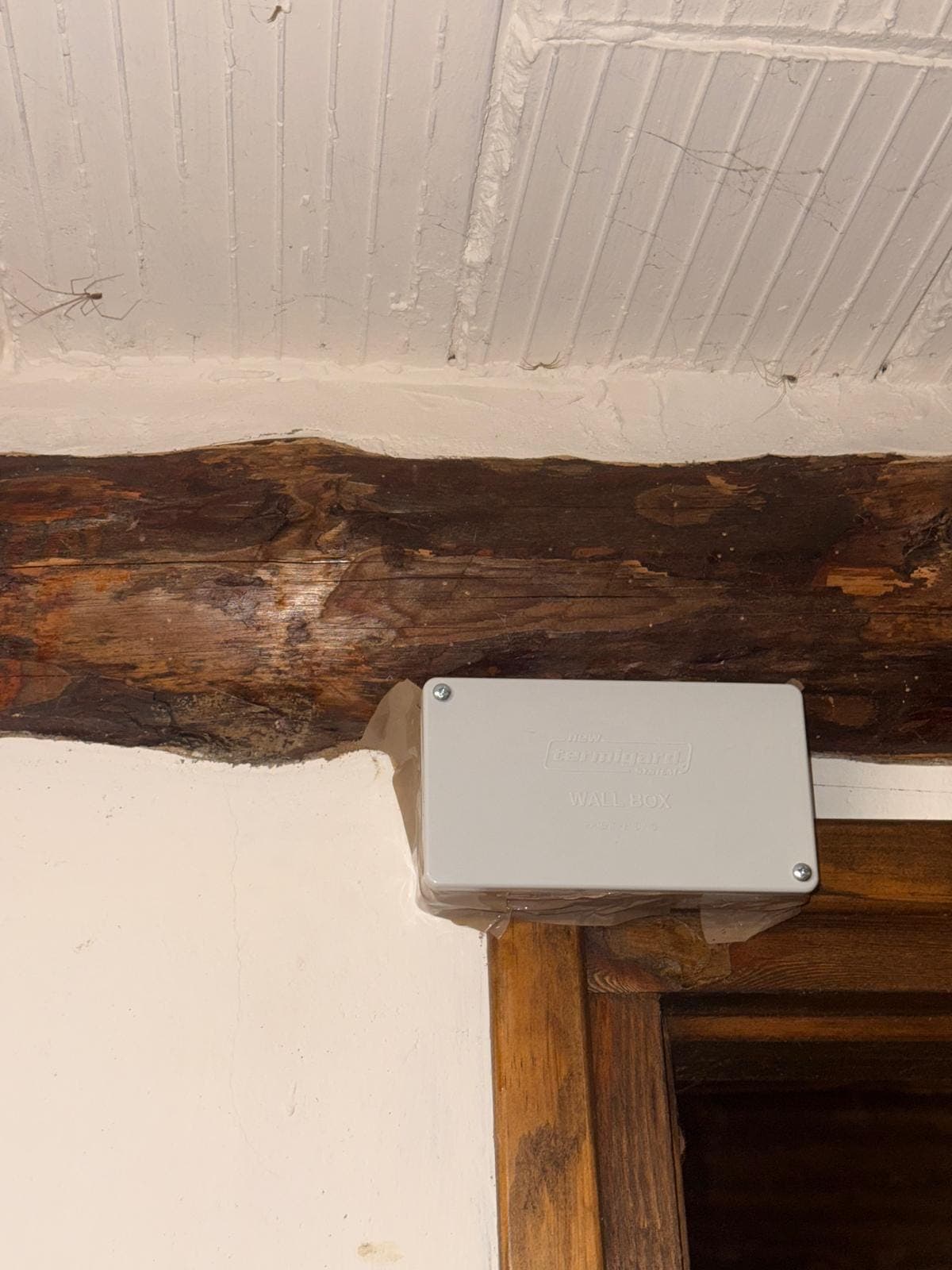
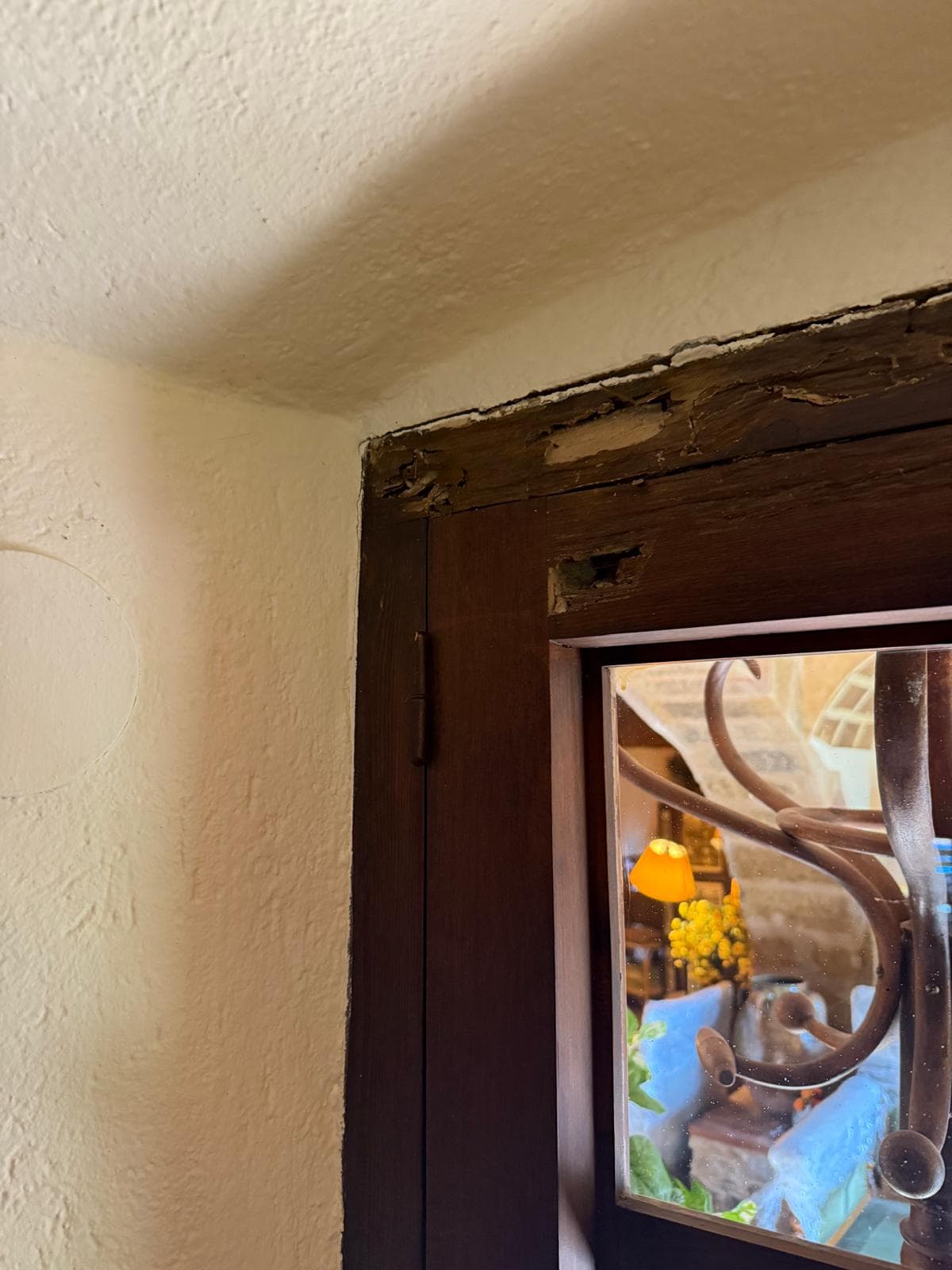
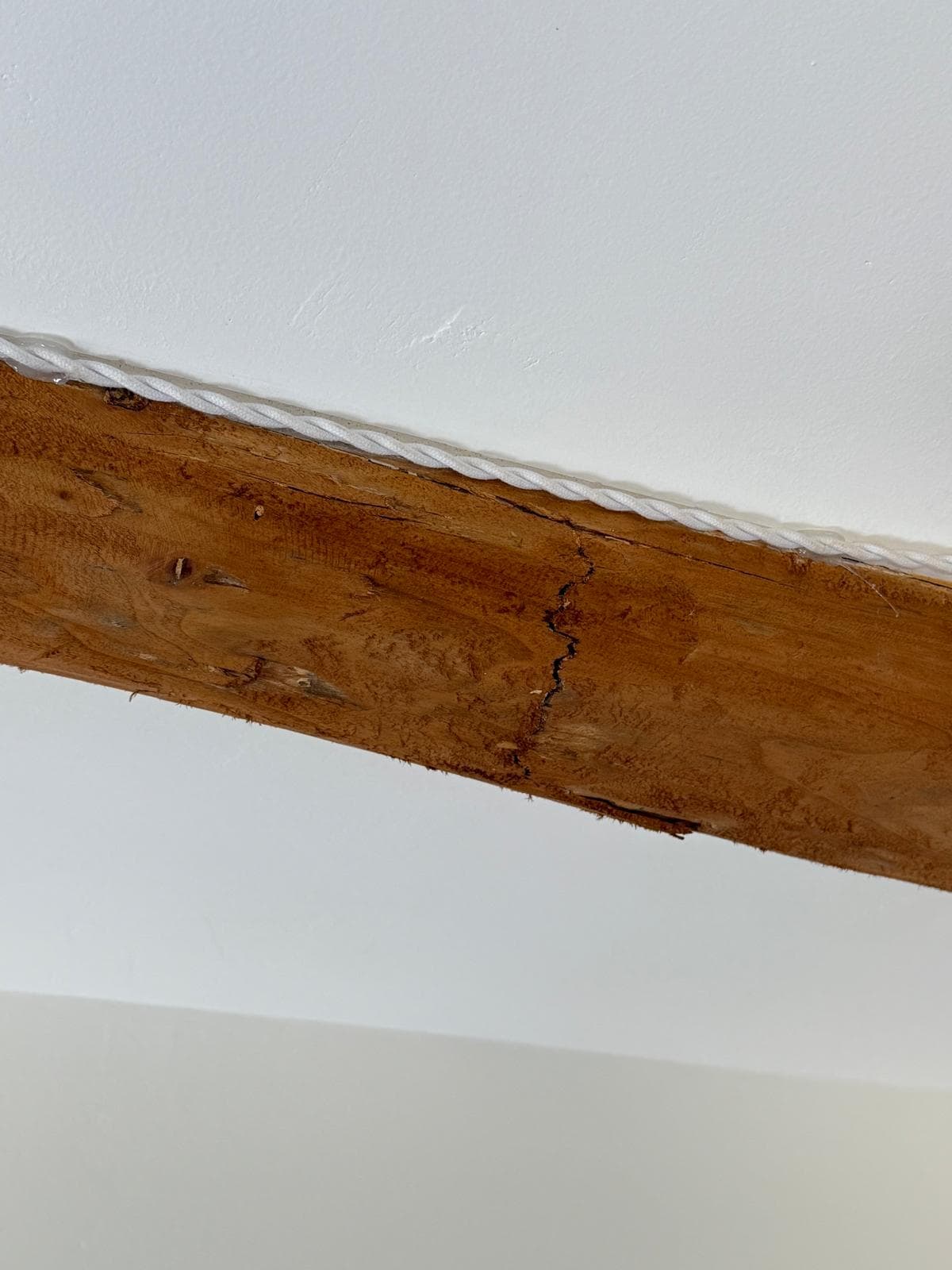
In the district's stately blocks the wood lives in the beam structure and under the parquet. We confirm with audiotermes whether the activity is real and set up the bait system only where it is needed.
Visual assessment visit included, at no cost and with no obligation. The technical study with audiotermes, which confirms every point of damage, is quoted separately and you decide with the figure in front of you. We work Monday to Saturday.
Request your no-obligation visual inspection
We reply within 24 hours.
Send us your enquiry
We serve the provinces of Barcelona and Girona.
* Required fields
A block from 1900 in Sant Gervasi can have termite galleries in the floor and all its wood sound, and telling one from the other avoids needless building work in the district of Sarrià-Sant Gervasi. In a flat in the upper districts we found no activity in any wooden element: only remains and passing galleries where the parquet had been taken up. Instead of building work, we defined prevention: three baits with detectors and three years of monitoring.
Termites in Sarrià-Sant Gervasi, at a glance
Where
Sarrià-Sant Gervasi, Barcelonès, province of Barcelona
Dominant pest
Subterranean termite (Reticulitermes) under the floors of stately blocks
Way in
The Collserola hillside ground beneath walls and floor slabs
What is hit first
Beam structure behind false ceilings and parquet nailed onto battens
Method
Detection with audiotermes and a bait station system with TP8 biocide
Real timescale
Three-year monitoring plan, with checks every two months in the first year
Guarantee
3 years in writing, starting when the treatment ends and the certificate of colony elimination is issued, with an annual inspection included
The stately block of Sarrià-Sant Gervasi holds more wood than it shows
The stately blocks of Sant Gervasi-Galvany and la Bonanova were built with timber framing and beam structures from the early years of the last century. The false ceiling and the mouldings hide that skeleton: the high ceilings that win hearts on every viewing rest on joists nobody has seen again since the last refurbishment. The original parquet is nailed onto battens, with an air gap underneath that the subterranean termite can travel along without showing on the surface. That is why a serious diagnosis starts by listening to the wood, not by ripping up boards.
In the upper part, between Sarrià and la Bonanova, detached villas with gardens survive that bring together the noblest and the most delicate side of the district: porches, galleries, wooden staircases and a watered garden that keeps the perimeter damp all year round. The subterranean termite is looking for exactly that, constant moisture with cellulose nearby, and it usually finds it at the base of a pergola or in the frame of a service door before it does in the living room. The check of a villa always starts in the garden.
Vallvidrera is another landscape within the same district: houses among woodland, on the Collserola hillside, with timber structure and joinery very close to the ground of the range. The weather ages the outdoor wood and makes it easy to mistake an old gallery for recent activity, in surroundings where the termite lives naturally in the hills. Telling what is alive from what stopped moving long ago is half the job, and it is done with audiotermes and without hurry, before proposing anything.
Sarrià-Sant Gervasi is a district of Barcelona where many blocks have been refurbished in phases, and it is common for an immaculate flat to keep the original beam structure and part of the original floor underneath. When remains or galleries turn up on lifting a floor, the temptation is to blame it all on the wood and quote for a major job. Our approach is calmer: identify the species, check whether there is real activity in each element and, when there is none, set up monitoring instead of opening up ceilings and floors.
Where does damaged wood show up first in Sarrià-Sant Gervasi?
Zone by zone, what was built, what wood sits inside and where the insect gets in. It is the reading our technicians make before deciding where the check starts.
Wood types and entry routes by zone in Sarrià-Sant Gervasi.
Zone of Sarrià-Sant Gervasi
Dominant construction
Wood present
Way in
First sign
Sarrià
Dominant constructionOld village core of houses between party walls
Wood presentBeam structure, staircases and period joinery
Way inWalls rising straight from the ground
First signDoor frame going hollow
Sant Gervasi-Galvany
Dominant constructionStately blocks with high ceilings
Wood presentFraming behind false ceilings and nailed parquet
Way inFloor void and old downpipes
First signGalleries on lifting a floor
el Putxet
Dominant constructionHillside blocks with partial refurbishments
Dominant constructionVillas with gardens and stately blocks
Wood presentPorches, pergolas and fine joinery
Way inWatered garden right against the facade
First signLoose wings after the spring flight
Vallvidrera
Dominant constructionHouses among woodland on the hillside
Wood presentTimber structure and outdoor joinery
Way inWoodland ground touching the house
First signSoil stuck to the base of posts
Source: ERRADICAT technical criteria from own work in Barcelonès · retrieved on 4 September 2026.
A real job in Sarrià-Sant Gervasi
The data comes from our own technical case files. Open the case and you will see the date, the method and the case file number; anything that could identify the client or the property stays out.
The flat in the upper districts that was going to lose all its parquet and only needed monitoring
Case file ER-2026-331
Property
Flat in a block of the Sarrià-Sant Gervasi district, with one area of parquet already taken up
Element inspected
Every wooden element in the flat and the floor of the area without parquet
Detected
Subterranean termite (passing galleries, no activity in the wood)
Timescale
Three years of scheduled monitoring, with checks every two months during the first
Method proposed
Three years of prevention and monitoring: three baits with detectors over the points with remains, checks every two months in the first year and three full inspections of the wood within the period
In August 2026 we visited a flat in the district with a previous diagnosis from another company on the table: the damage was being put down to another species and the recommendation was to lift all the parquet. Our check detected no activity in any wooden element; there were remains and galleries in the floor, at three points in an area where the parquet had already been taken up. The survey's verdict was that these were passing galleries of subterranean termite, and instead of building work a three-year prevention and monitoring system was defined: three baits with detectors over the points with remains, checks every two months in the first year and three full inspections of the wood within the period. The parquet that was left stayed where it was.
Three signs that really tell you whether there is activity
You do not need to see an insect. These three are what we actually find when we reach a home, and all three can be checked without tools.
Mud tubes on a wall or skirting board
Mud tubes the width of a pencil climbing the wall, the skirting board or the inside of a wardrobe. They are the tunnel the subterranean termite builds to shield itself from light and dry air. If they are damp inside, there is activity right now.
Loose wings on the window sill, March to June
In spring the colony releases winged reproducers. They fly little, shed their wings quickly and pile up on a window sill or by a terrace door. Finding wings indoors means a mature colony nearby.
Wood that sounds hollow even though it looks whole
The termite eats the inside and spares a thin surface layer, so the element looks intact. Tap it with your knuckles and the sound changes from solid to hollow. On flooring it feels like a board that gives underfoot.
When do termites fly in Sarrià-Sant Gervasi?
Loose wings show up with spring on the porches of la Bonanova and the balconies of Galvany, when the Collserola hillside warms up; the check that follows is unhurried: the low wood first and listening with audiotermes afterwards.
Activity: from March to June · Peak: April and May.
Drywood termite Kalotermes flavicollis
Activity: from August to October · Peak: September.
Highest chance of seeing them
Active period
No flight expected
These dates are indicative windows. Flight depends on temperature and humidity, so each year it starts earlier or later: if you see winged insects outside these months, it is still a reason for an inspection.
Source: Technical literature of the timber sector · retrieved on 21 July 2026.
The bait system
We start by listening. The audiotermes amplifies the sound inside the wood and locates activity without lifting the floor or drilling anything, and from that comes a floor plan of the property with every point of damage marked.
Then the stations go in. We place indoor bait stations over the located sources and outdoor bait stations spread around the building's perimeter, loaded with bait for subterranean termites, a TP8-type biocide. The perimeter barrier is the part most providers skip, and it is the one that reaches the whole colony.
From there it is a matter of checks: every station is monitored, the bait replenished and the activity recorded until the nest stops responding. There is no shortcut, and anyone promising eradication in one visit is not talking about subterranean termites.
We publish the real timescales because they pre-qualify better than any promise. If someone wants a fix in one afternoon, better they know before calling.
Total duration:Three-year monitoring plan, with checks every two months in the first year
1
Included
Visual assessment visit
A walk through the property with the naked eye to see what there is and how far it goes. The assessment visit is included, at no cost and with no obligation, and it is the starting point when the signs are unclear.
2
1 working day, with the figure agreed first
Technical study
Percussion sounding, listening with audiotermes, species identification and location of the access routes from the ground. We always recommend it: it confirms every point of damage and decides where each bait station must go. It is quoted separately, so you see it with the scope in front of you and it starts when you say yes.
3
A few days later
Report and floor plan
Floor-by-floor plan of the property with the issues found, the extent of the damage and the treatment proposal with your written quote. It is part of the technical study.
4
1 working day
System installation
Placement of the indoor bait stations over the sources and of the outdoor perimeter barrier around the building.
5
Every 6 to 8 weeks
Monitoring checks
Check of every station, bait replenishment and activity record. The frequency adjusts to what the system shows.
6
6 to 12 months
Eradication of the nest
The timescale depends on the size of the colony. It is the real range of the bait system and it cannot be compressed.
7
3 years
Guarantee
Three years from eradication, with the annual inspection included at no cost.
The visual assessment visit is included, at no cost and with no obligation: when the signs are unclear, it is the way to clear doubts. Even so, we always recommend the technical study with audiotermes, a floor plan of the issues found and a report, which is quoted separately: it confirms every point of damage, fixes where the treatment must act and from it comes your written quote, so you decide with the figure in front of you.
Source: ERRADICAT's intervention protocol · retrieved on 4 September 2026.
What we get asked in Sarrià-Sant Gervasi
Another company has told me all the parquet has to come up because of termites. Is a second opinion worth it?
Yes, and in Sarrià-Sant Gervasi we have seen it at close quarters this very summer. In a flat in the district with that recommendation on the table, our check found no activity in any piece of wood: the galleries in the floor were passing ones and what was needed was monitoring with detector baits, not building work. A second look with audiotermes and without hurry can save an entire floor.
I live in a stately block in Sant Gervasi-Galvany. Is termite control done flat by flat or with the residents' association?
Yes, it can start with a single flat, although in a stately block in Sant Gervasi-Galvany the sensible thing is to involve the residents' association. The subterranean termite moves through the structure and the common areas, and the stations perform better when they also cover the base of the building. The technical study marks out how far the activity reaches and leaves the association to decide what gets protected and in what order.
In my villa in la Bonanova the garden is watered every day. Does that attract termites?
Yes, it plays a part: a watered garden in la Bonanova keeps the perimeter of the house damp, which is the condition the subterranean termite needs to settle nearby. There is no need to stop watering; there is a need to watch the wood that touches that ground, porches, pergolas and low frames, and to confirm with audiotermes any doubtful remains before deciding anything.
I have found loose wings on a balcony in el Putxet. Does it mean my block is affected?
Not necessarily: wings on a balcony in el Putxet warn of a mature colony in the surroundings, not of activity in your block. The sensible step is to check the lowest wood in the building and listen with audiotermes at the doubtful points; if activity appears, the bait system is set up over the active spots and the flat stays in use.
My house in Vallvidrera is surrounded by woodland. Does prevention make sense?
Yes, Vallvidrera is where prevention makes the most sense in the whole district. A house among woodland lives alongside colonies that inhabit the range, and the strategy is not to wipe them out of the hills, it is to control the strip where the ground touches the house. A ring of stations checked regularly and periodic inspection of the outdoor joinery mean you find out early, with the house intact.
How far do we travel from Sarrià-Sant Gervasi?
In Sarrià-Sant Gervasi we cover the whole municipal area, including Sarrià, Sant Gervasi-Galvany, el Putxet, la Bonanova and Vallvidrera, and we also reach les Corts, Gràcia and Sant Just Desvern. We work Monday to Saturday, 7:30 to 22:00.
·If you are still unsure what you have, the visual assessment visit is included: no cost and no obligation.
·With signs in front of you, we recommend the technical study with audiotermes, floor plan and report: it confirms every point of damage, decides where each bait station goes and from it comes your written quote. It is quoted separately and starts when you say yes.
·During the bait programme our technicians return every 6 to 8 weeks, and those checks are part of the treatment.
·And if your property sits right on the edge of the area, we confirm it by phone in the same call.
Sarrià-Sant Gervasi concentrates stately blocks and villas with gardens; the rest of the province's building types, from the seaside house to the village house, have their place on the Barcelona page.
Sarrià-Sant Gervasi deals with flats in blocks between party walls, whereas in Caldes de Montbui the two systems defined in the same month were for houses with land and the weight on the perimeter.
The ROESP is the Spanish official register of pesticide establishments and services. It is the legal requirement for applying professional-use biocides, and not everyone offering these treatments meets it.
Technicians by trade, since November 2011
The technician who signs the reports, Sergi Casadevall Casas, has been treating termites and woodworm in Barcelona and Girona since November 2011, holding the biocide applicator licence. Visits are always made by our technicians, never by salespeople.
Written guarantee
The conditions and timescales go in the intervention report, signed. For termites, 3 years from the certificate of colony elimination, with the annual inspection included at no added cost.
The floor plan and the report stay with you
The technical study ends in a floor-by-floor plan of the property, with the issues found marked and the real extent of the damage. It is quoted separately and the document stays in the owner's hands, to work with the architect or to seek a second opinion with data on the table.
Barcelona and Girona under the same registration
Spanish Royal Decree 830/2010 establishes that a pest-control company's registration in one autonomous community is valid to work in the rest. That is why we cover both provinces with the same registration and the same team.
Content of this page reviewed by our technicians on 4 September 2026.
What happens when you call us from Sarrià-Sant Gervasi
We ask what you have seen and where. If the signs are unclear, we book the visual assessment visit, which is included and takes little time. And when the signs are there, what we recommend is the technical study: audiotermes, a floor plan of the issues found and a report, with your written quote so you decide with the figure in front of you. If the wood is healthy, we tell you that too: you save yourself the treatment.
The visual assessment visit is included, at no cost and with no obligation: when the signs are unclear, it is the way to clear doubts. Even so, we always recommend the technical study with audiotermes, a floor plan of the issues found and a report, which is quoted separately: it confirms every point of damage, fixes where the treatment must act and from it comes your written quote, so you decide with the figure in front of you.