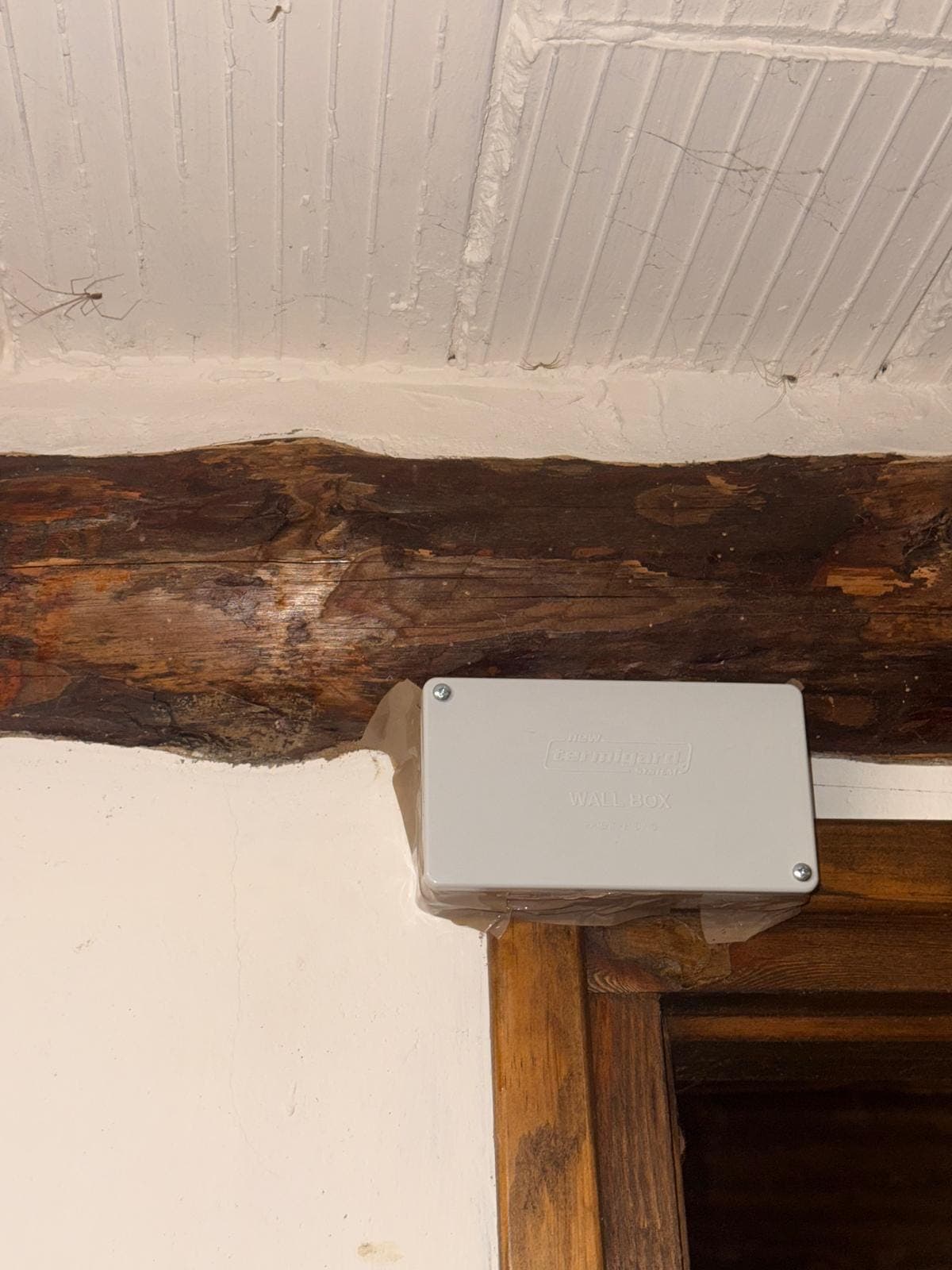
In Blanes the activity usually sits under the flooring long before it reaches a beam. We locate it with audiotermes and fit the bait stations indoors and around the building's perimeter.
Visual assessment visit included, at no cost and with no obligation. The technical study with audiotermes, which confirms every point of damage, is quoted separately and you decide with the figure in front of you. We work Monday to Saturday.
Request your no-obligation visual inspection
We reply within 24 hours.
Send us your enquiry
We serve the provinces of Barcelona and Girona.
* Required fields
A flat in Blanes without a single wooden beam can still have subterranean termites. The colony climbs up from the ground and attacks the parquet laid over the screed, the first cellulose it finds. Blanes sits on the alluvial plain of the Tordera delta, an aquifer of sands and gravels, and that subsoil is the way in. Detection is done with audiotermes, without lifting the flooring.
Termites in Blanes, at a glance
Where
Blanes, La Selva, province of Girona
Dominant pest
Subterranean termite (Reticulitermes)
Way in
Sandy ground of the Tordera delta
What is hit first
Parquet over screed and wooden skirting
Method
Bait system with TP8 biocide, indoors and around the perimeter
Real timescale
Checks every 6 to 8 weeks until the nest stops responding
Guarantee
3 years in writing, starting when the treatment ends and the certificate of colony elimination is issued, with an annual inspection included
Why do termites turn up in Blanes flats that have not got a single wooden beam?
Because what the colony has beneath it is sand and gravel. Blanes is built on the alluvial plain of the Tordera delta, an aquifer whose saline intrusion was detected through the chloride content of the water at the town's treatment plant. For a subterranean termite, that loose ground with water close by is the easiest imaginable for opening galleries. It reaches the base of the building without meeting any resistance.
The population of Blanes went from 9,294 inhabitants in 1960 to 20,353 in 1981, according to the Gran Enciclopèdia Catalana, and that leap was built in blocks of flats. In those flats the only wood in the building is usually the parquet nailed or glued over the screed, plus the skirting around the walls. Owners dismiss the warning because they take it for granted that no beams means no risk, and that is exactly the reading that delays the diagnosis.
The old town of Blanes does keep timber-joist floors on rubble masonry walls. Even there, the first piece to register activity is usually the skirting or the foot of the staircase, not the ceiling. Height matters more than material: the subterranean termite starts with whatever touches the ground and climbs from there.
Reticulitermes does produce swarming flights in spring, and in Blanes the loose wings turn up on window sills and beside terrace doors. What this species does not do is found a colony by air inside a piece of dry wood, as a drywood termite does. It needs permanent contact with damp ground, so the source in a Blanes flat is always explained from below, even when the warning arrives through a window.
Where does damaged wood show up first in Blanes?
Zone by zone, what was built, what wood sits inside and where the insect gets in. It is the reading our technicians make before deciding where the check starts.
Wood types and entry routes by zone in Blanes.
Zone of Blanes
Dominant construction
Wood present
Way in
First sign
the old town
Dominant constructionTerraced houses of rubble masonry
Wood presentTimber joists and old joinery
Way inWall bases that touch the ground
First signSkirting that gives when pressed
s'Abanell
Dominant constructionBlocks of flats from the sixties
Wood presentParquet over screed and skirting
Way inScreed joints on the ground floor
First signBoards that sound hollow underfoot
els Pins
Dominant constructionHomes with plots on sandy ground
Wood presentPergolas, porches and outdoor joinery
Way inWood resting directly on the soil
First signMud tube at the base of the wall
Source: ERRADICAT technical criteria from own work in La Selva · retrieved on 4 September 2026.
Blanes in verifiable figures
16,290
principal family homes counted in Blanes in 2021
Source: Idescat, El municipi en xifres
20,353
inhabitants in 1981, against the 9,294 of 1960: the stock of blocks was born in those two decades
Source: Gran Enciclopèdia Catalana
How it was counted: A hydrogeological figure published by the Catalan water authority on the lower Tordera aquifer. It is cited as text, without a link, and no sums of our own are added to it: ERRADICAT plays no part in that measurement and projects no infestation figure onto it.
Blanes sits on the alluvial plain of the Tordera delta, an aquifer of sands and gravels whose over-exploitation worsened the saline intrusion, detected through the chloride content of the water at the town's treatment plant; since the desalination plant of 2002 the levels have recovered by some 10 metres in some wells.
Source: Agència Catalana de l'Aigua (Catalan Water Agency). Consulted on .
An aquifer of sands and gravels beneath the town explains why in Blanes the warning comes from the flooring and not from the ceiling. The subterranean termite digs effortlessly through loose material and needs to keep in contact with damp ground. In the delta it has that a few metres below the screed. That is why in Blanes the inspection starts with the wood that touches the floor: parquet, skirting and the foot of the door frames.
A real job in Blanes
The data comes from our own technical case files. Open the case and you will see the date, the method and the case file number; anything that could identify the client or the property stays out.
The Blanes flat without a single beam that had termites under the parquet
Case file ER-2026-277
Property
Urban home in Blanes, with the damage located on the second floor
Element treated
Parquet of the second-floor dining room and wooden skirting
Regular checks of every station until the nest is fully eradicated, with a 3 year guarantee from the certificate of colony elimination
Method applied
Bait system with TP8 biocide: 8 indoor bait stations over the activity points in the parquet and 8 numbered outdoor bait stations around the building
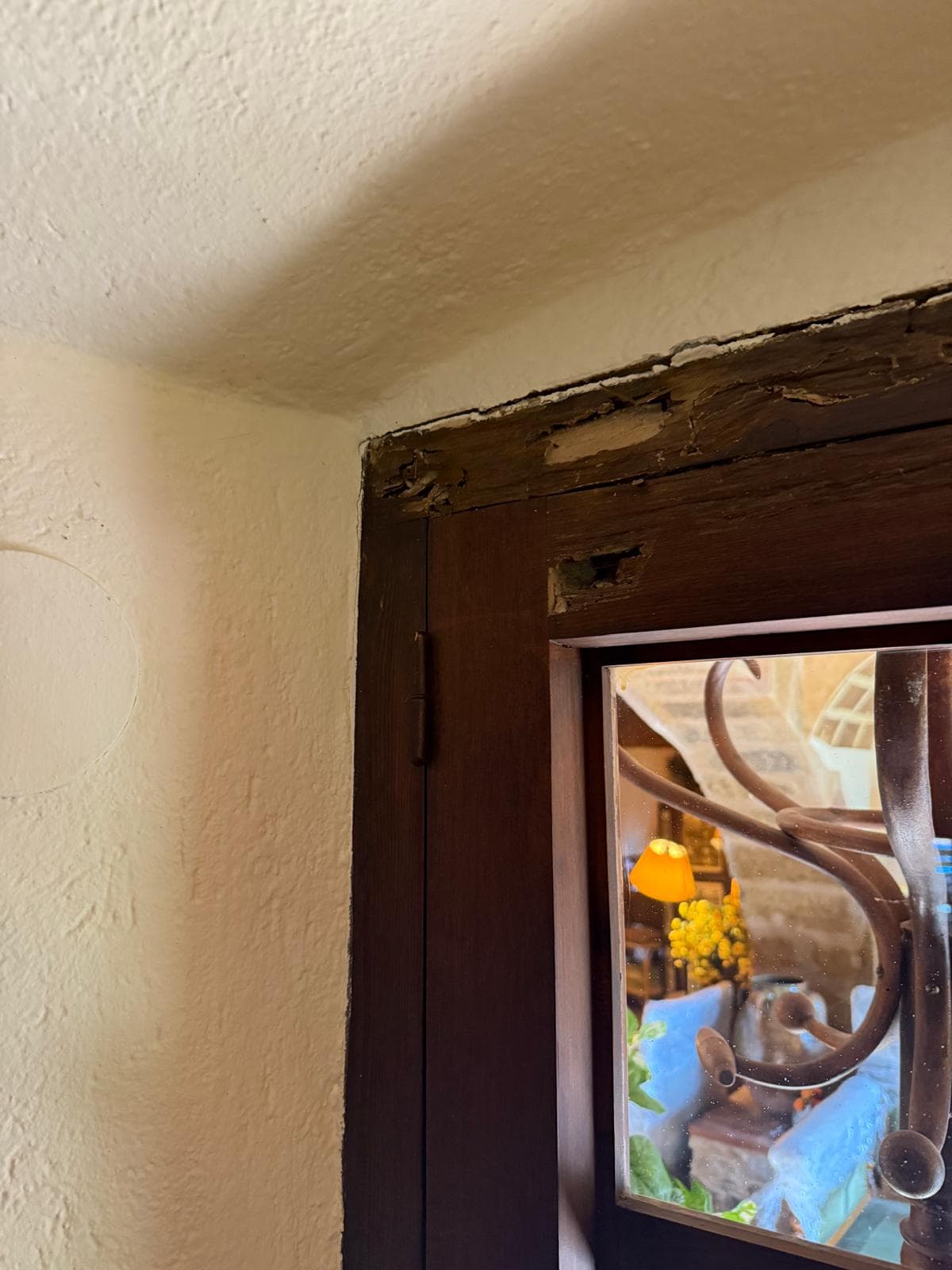
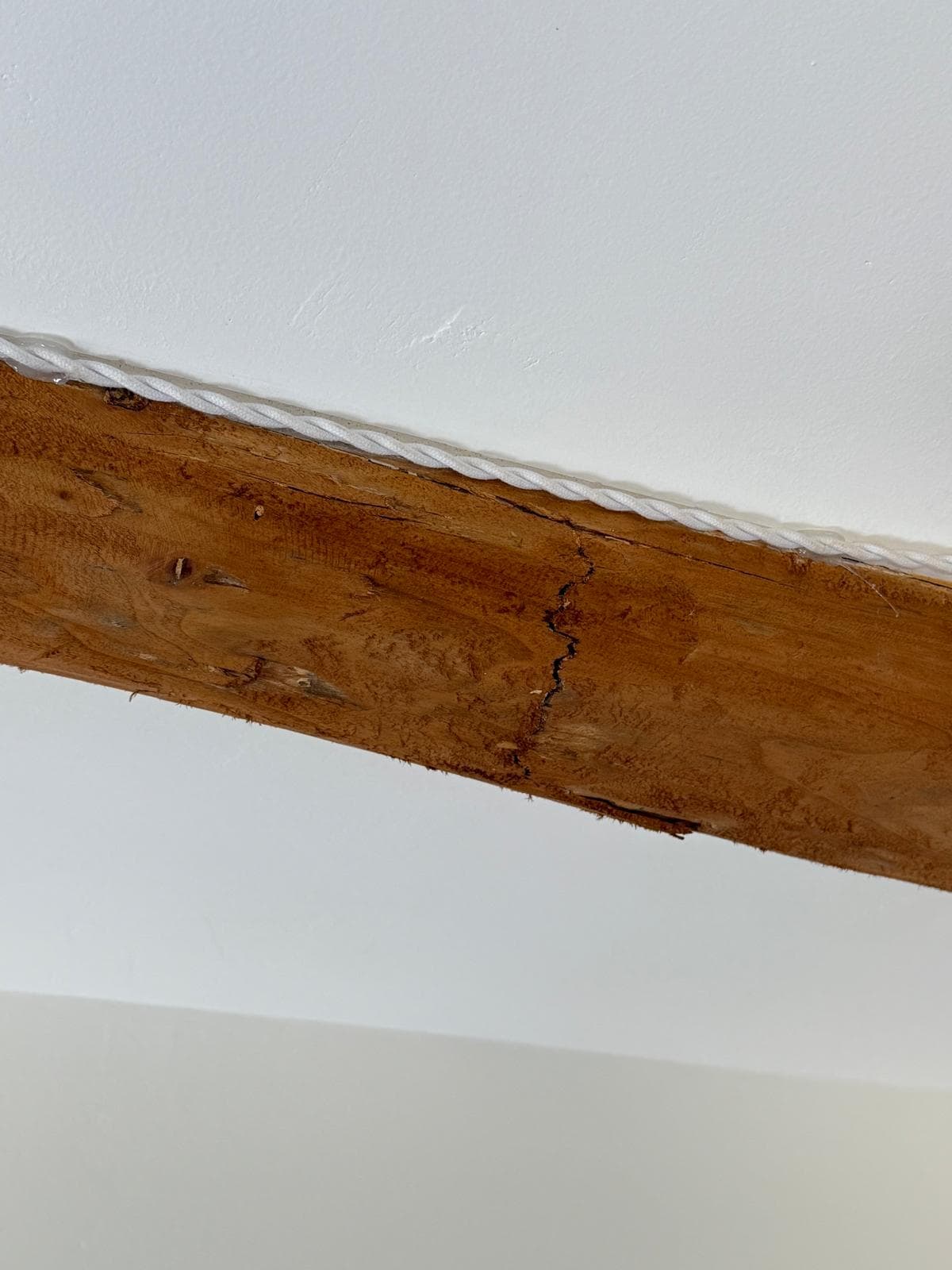
The Blanes report, dated 17 July 2026, places the damage on the second floor. There is activity in the dining-room parquet beside the picture window and heading towards the kitchen, marked traces near the window and an already inactive tunnel in the wooden skirting, which shows where the colony came in from the ground. Listening with audiotermes located the sources without lifting a single board. Over those points 8 indoor bait stations were placed, and another 8 outdoor ones were numbered around the perimeter and drawn on the first-floor plan. The case file's photographic report includes seven shots of the damage.
Three signs that really tell you whether there is activity
You do not need to see an insect. These three are what we actually find when we reach a home, and all three can be checked without tools.
Mud tubes on a wall or skirting board
Mud tubes the width of a pencil climbing the wall, the skirting board or the inside of a wardrobe. They are the tunnel the subterranean termite builds to shield itself from light and dry air. If they are damp inside, there is activity right now.
Loose wings on the window sill, March to June
In spring the colony releases winged reproducers. They fly little, shed their wings quickly and pile up on a window sill or by a terrace door. Finding wings indoors means a mature colony nearby.
Wood that sounds hollow even though it looks whole
The termite eats the inside and spares a thin surface layer, so the element looks intact. Tap it with your knuckles and the sound changes from solid to hollow. On flooring it feels like a board that gives underfoot.
When do termites fly in Blanes?
In Blanes the loose wings appear on window sills and terraces along the seafront strip between March and June, peaking in April and May, once the delta ground has already warmed up.
Activity: from March to June · Peak: April and May.
Drywood termite Kalotermes flavicollis
Activity: from August to October · Peak: September.
Highest chance of seeing them
Active period
No flight expected
These dates are indicative windows. Flight depends on temperature and humidity, so each year it starts earlier or later: if you see winged insects outside these months, it is still a reason for an inspection.
Source: Technical literature of the timber sector · retrieved on 21 July 2026.
The bait system
We start by listening. The audiotermes amplifies the sound inside the wood and locates activity without lifting the floor or drilling anything, and from that comes a floor plan of the property with every point of damage marked.
Then the stations go in. We place indoor bait stations over the located sources and outdoor bait stations spread around the building's perimeter, loaded with bait for subterranean termites, a TP8-type biocide. The perimeter barrier is the part most providers skip, and it is the one that reaches the whole colony.
From there it is a matter of checks: every station is monitored, the bait replenished and the activity recorded until the nest stops responding. There is no shortcut, and anyone promising eradication in one visit is not talking about subterranean termites.
We publish the real timescales because they pre-qualify better than any promise. If someone wants a fix in one afternoon, better they know before calling.
Total duration:Checks every 6 to 8 weeks until the nest stops responding
1
Included
Visual assessment visit
A walk through the property with the naked eye to see what there is and how far it goes. The assessment visit is included, at no cost and with no obligation, and it is the starting point when the signs are unclear.
2
1 working day, with the figure agreed first
Technical study
Percussion sounding, listening with audiotermes, species identification and location of the access routes from the ground. We always recommend it: it confirms every point of damage and decides where each bait station must go. It is quoted separately, so you see it with the scope in front of you and it starts when you say yes.
3
A few days later
Report and floor plan
Floor-by-floor plan of the property with the issues found, the extent of the damage and the treatment proposal with your written quote. It is part of the technical study.
4
1 working day
System installation
Placement of the indoor bait stations over the sources and of the outdoor perimeter barrier around the building.
5
Every 6 to 8 weeks
Monitoring checks
Check of every station, bait replenishment and activity record. The frequency adjusts to what the system shows.
6
6 to 12 months
Eradication of the nest
The timescale depends on the size of the colony. It is the real range of the bait system and it cannot be compressed.
7
3 years
Guarantee
Three years from eradication, with the annual inspection included at no cost.
The visual assessment visit is included, at no cost and with no obligation: when the signs are unclear, it is the way to clear doubts. Even so, we always recommend the technical study with audiotermes, a floor plan of the issues found and a report, which is quoted separately: it confirms every point of damage, fixes where the treatment must act and from it comes your written quote, so you decide with the figure in front of you.
Source: ERRADICAT's intervention protocol · retrieved on 4 September 2026.
What we get asked in Blanes
My Blanes flat has no wooden beams, only parquet. Can I still have termites?
Yes, and in Blanes it is the most common warning from blocks with no structural timber. The subterranean termite climbs up from the ground and the parquet laid over the screed is the first cellulose it finds. The signs are boards that sound hollow underfoot, a gentle dip beside a picture window or traces of soil in the skirting joint. The audiotermes confirms the activity without lifting the flooring.
Do Blanes termites fly in from one garden to the next?
Not in the way people usually imagine. The subterranean termite does produce swarming flights in spring, and finding loose wings on a Blanes window sill means there is a mature colony nearby. What this species does not do is settle in a piece of dry wood it reaches by flying: to found and sustain the colony it needs permanent contact with damp ground. That is why the source is searched for from the ground upwards, not the other way round.
I live on the seafront, in s'Abanell, on sand. Does that change the treatment?
It changes the layout of the outdoor stations, not the method. In the sands and gravels of the Tordera delta the galleries open easily and the colony can be quite far from the point where the damage shows, so the perimeter ring is spread wider and checked more often. The bait system with TP8 biocide is the same in the old town of Blanes as on the seafront.
I have a holiday-let apartment in Blanes. Does it have to close during the programme?
There is no need. The stations are installed in a single day, they stay closed and flush with the floor, and every later check is a short visit slotted between one check-out and the next check-in. It is one of the reasons why on the La Selva coast we work with baits and not with mass soil injection: the apartment stays in use for the months the programme lasts.
In May loose wings appeared on the window sill of my house in Blanes. Is it urgent?
It is a reason to inspect, not to panic. The wings mean a colony has matured enough to release reproductives, and in Blanes that coincides with spring and with the delta ground already warmed up. The next step is locating the source: a visual inspection of the points where the wood touches the screed and listening with audiotermes in the suspect areas, before deciding on any action.
How far do we travel from Blanes?
In Blanes we cover the whole municipal area, including the old town, s'Abanell and els Pins, and we also reach Lloret de Mar, Malgrat de Mar and Tordera. We work Monday to Saturday, 7:30 to 22:00.
·If you are still unsure what you have, the visual assessment visit is included: no cost and no obligation.
·With signs in front of you, we recommend the technical study with audiotermes, floor plan and report: it confirms every point of damage, decides where each bait station goes and from it comes your written quote. It is quoted separately and starts when you say yes.
·During the bait programme our technicians return every 6 to 8 weeks, and those checks are part of the treatment.
·And if your property sits right on the edge of the area, we confirm it by phone in the same call.
In l'Escala the published case file is not a treatment but a technical study, and the activity appeared in door frames and in patio wood in contact with the soil, not under a floor.
Calonge serves as the pest contrast: in the exposed-beam floors of the old quarter what dominates is woodworm, which is treated by injection and not with bait stations.
Blanes shares the same holiday housing profile with the town next door, and in Lloret that seasonal use adds a factor of its own: a flat that stays shut takes months to raise the alarm.
The ROESP is the Spanish official register of pesticide establishments and services. It is the legal requirement for applying professional-use biocides, and not everyone offering these treatments meets it.
Technicians by trade, since November 2011
The technician who signs the reports, Sergi Casadevall Casas, has been treating termites and woodworm in Barcelona and Girona since November 2011, holding the biocide applicator licence. Visits are always made by our technicians, never by salespeople.
Written guarantee
The conditions and timescales go in the intervention report, signed. For termites, 3 years from the certificate of colony elimination, with the annual inspection included at no added cost.
The floor plan and the report stay with you
The technical study ends in a floor-by-floor plan of the property, with the issues found marked and the real extent of the damage. It is quoted separately and the document stays in the owner's hands, to work with the architect or to seek a second opinion with data on the table.
Barcelona and Girona under the same registration
Spanish Royal Decree 830/2010 establishes that a pest-control company's registration in one autonomous community is valid to work in the rest. That is why we cover both provinces with the same registration and the same team.
Content of this page reviewed by our technicians on 4 September 2026.
What happens when you call us from Blanes
We ask what you have seen and where. If the signs are unclear, we book the visual assessment visit, which is included and takes little time. And when the signs are there, what we recommend is the technical study: audiotermes, a floor plan of the issues found and a report, with your written quote so you decide with the figure in front of you. If the wood is healthy, we tell you that too: you save yourself the treatment.
The visual assessment visit is included, at no cost and with no obligation: when the signs are unclear, it is the way to clear doubts. Even so, we always recommend the technical study with audiotermes, a floor plan of the issues found and a report, which is quoted separately: it confirms every point of damage, fixes where the treatment must act and from it comes your written quote, so you decide with the figure in front of you.