Termite treatment in Sitges: the original joinery stays
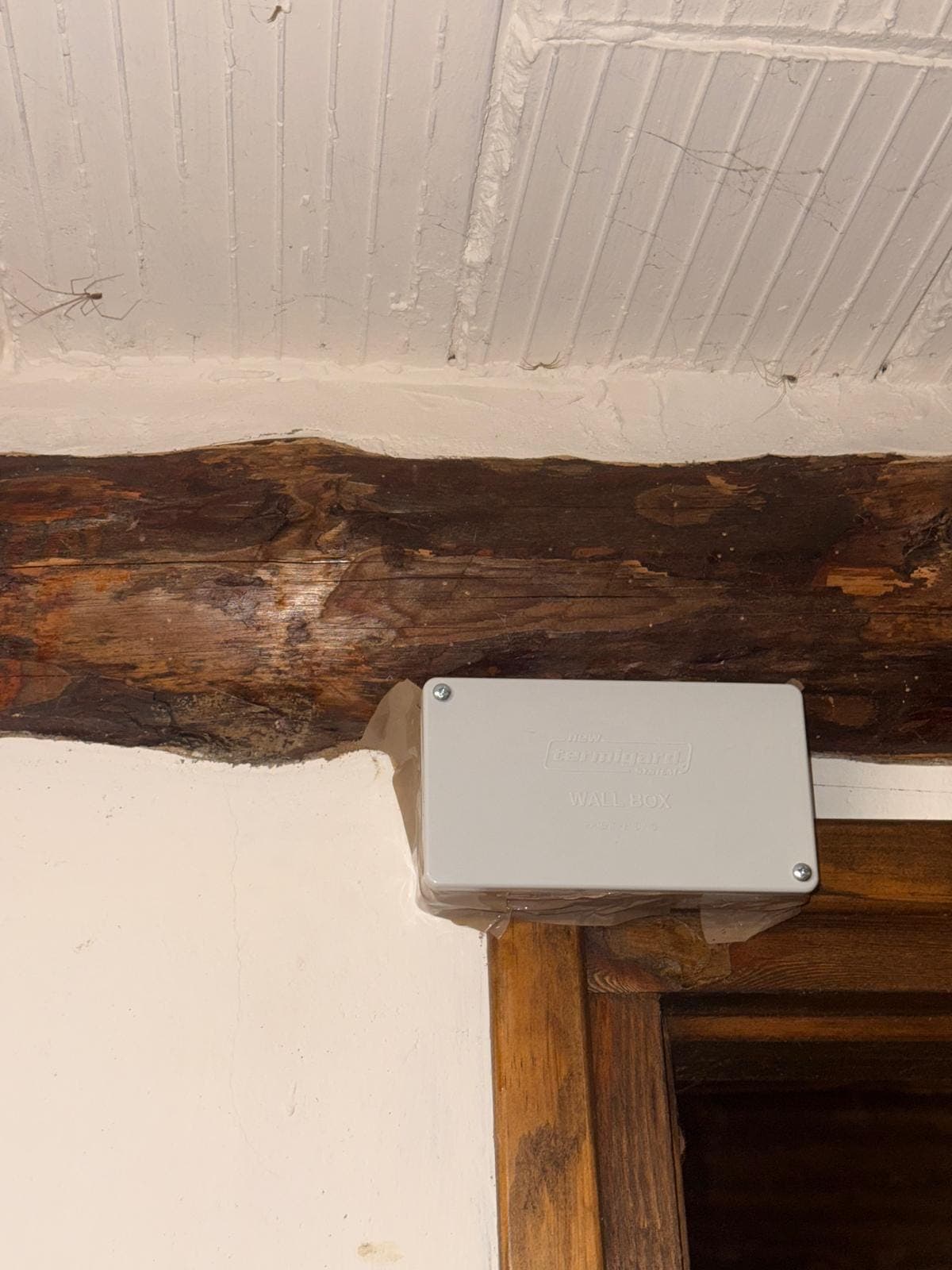
In Sitges the balconies, the galleries and the original doors are part of what the house is worth. We locate the colony with audiotermes and treat it with a bait station system that does not require touching the joinery.
Visual assessment visit included, at no cost and with no obligation. The technical study with audiotermes, which confirms every point of damage, is quoted separately and you decide with the figure in front of you. We work Monday to Saturday.
Request your no-obligation visual inspection
We reply within 24 hours.
Send us your enquiry
We serve the provinces of Barcelona and Girona.
* Required fields
The joinery of an indiano house in Sitges can be defended from termites without removing a single piece. The bait programme with TP8 biocide acts against the nest from discreet stations, and detection with audiotermes confirms which balconies, galleries or doors have activity before anything is decided. In a protected old town, where every original element adds value to the property, that order matters: the diagnosis always comes before the treatment.
Termites in Sitges, at a glance
Where
Sitges, Garraf, province of Barcelona
Dominant pest
Subterranean termite, with woodworm common in the beamed ceilings
Way in
Walls and ground slabs in contact with the ground of the old town
What is hit first
Original ground-floor joinery: doors, frames and skirting boards
Method
Bait system with TP8 biocide, with prior detection by audiotermes
Real timescale
Periodic checks every 6 to 8 weeks, until activity ceases completely
Guarantee
3 years in writing, starting when the treatment ends and the certificate of colony elimination is issued, with an annual inspection included
Why can't a termite treatment in Sitges start by ripping out the joinery?
The indiano houses of Sitges, built by emigrants returning from the Americas, were meant to show off a fortune, and a good part of that fortune was spent on wood: turned balconies, glazed galleries, louvred shutters, front doors carved from choice timbers. Whoever buys or inherits one of these houses buys its joinery too, because that is what sets it apart from any new build. A termite treatment that starts by removing original pieces destroys value along the way. The bait system allows the opposite: acting on the colony and keeping every element in its place.
The old town of Sitges, huddled around the church above the sea, is protected, and the protection extends to facades and joinery. Here no door gets changed on a whim, and there is no need to: the terraced houses share walls that rise from the ground, and the subterranean termite travels inside them with no regard for boundaries. Bait stations fit this setting because they require no building work, they do not alter the look of the building and they attack the origin of the problem in the ground that all the properties share.
Terramar is another way of living in Sitges: villas with gardens by the promenade, pergolas, porches and outdoor joinery that stretches the house out towards the greenery. That comfort has an underground reading. A garden that gets watered never lets the ground dry out, and that sustained damp is the best possible invitation for a colony. On these plots the watch is organised as a ring, with stations spread around the home, attention to the wood that touches the soil and periodic checks of porches, sheds and fencing.
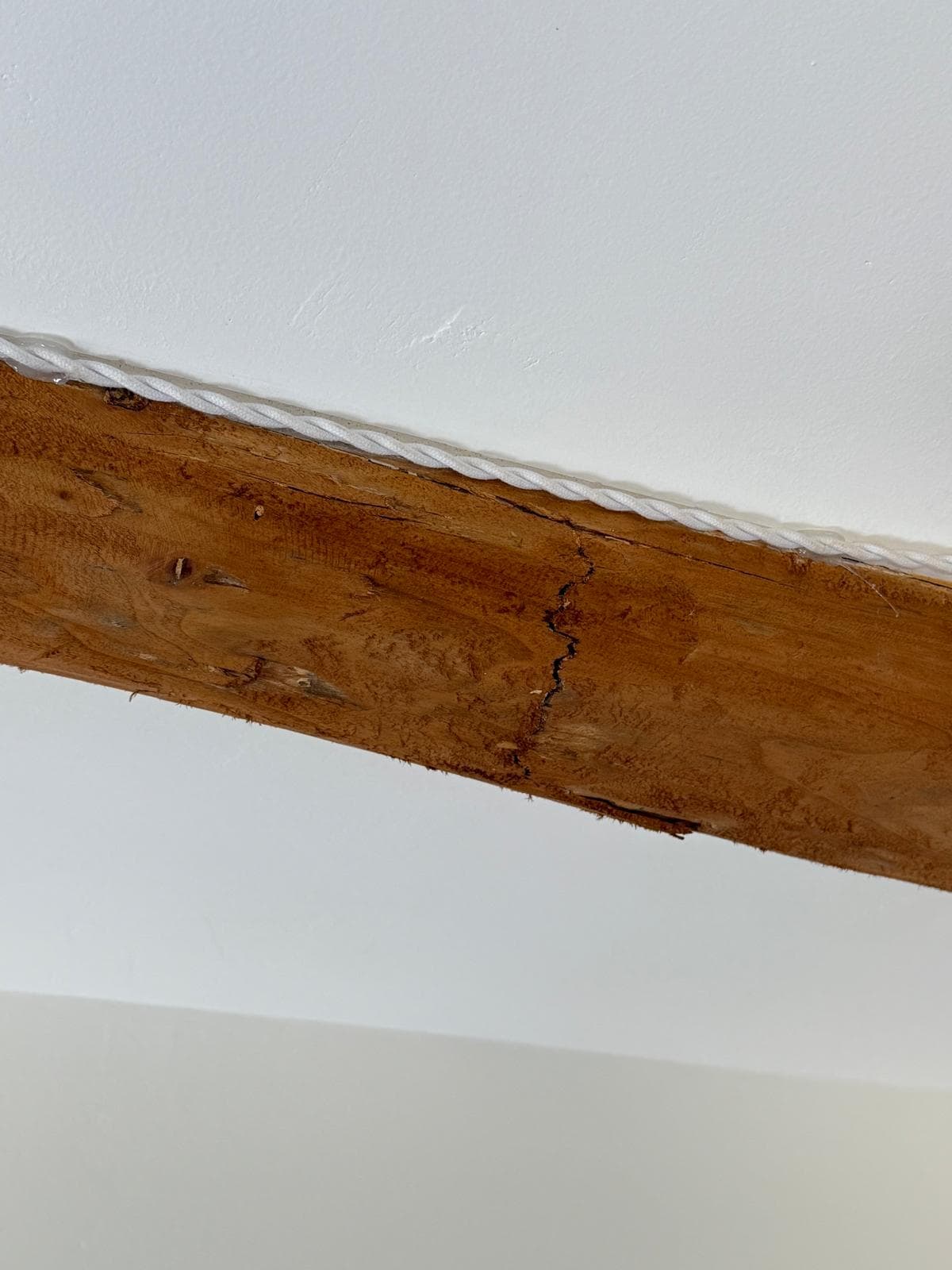
The beamed ceilings of the old houses of Sitges often host two tenants that get mistaken for each other. Woodworm is a resident of the piece itself and completes its cycle there; the termite is a visitor that climbs up from the ground and returns to it. The remedies are nothing alike: pressure injection with non-return valves for the first, bait stations for the second. That is why the technicians assess each element separately, with audiotermes, and only with the full picture is the treatment proposed.
Where does damaged wood show up first in Sitges?
Zone by zone, what was built, what wood sits inside and where the insect gets in. It is the reading our technicians make before deciding where the check starts.
Wood types and entry routes by zone in Sitges.
Zone of Sitges
Dominant construction
Wood present
Way in
First sign
the old town
Dominant constructionTerraced houses of the protected core
Wood presentDoors, balconies and original beam work
Way inParty walls rising from the ground
First signDoor frame going hollow
Sant Sebastià
Dominant constructionFishermen's houses facing the beach
Wood presentOutdoor joinery weathered by the salt air
Way inGround slabs and courtyards at street level
First signShutter that sounds hollow when knocked
Terramar
Dominant constructionLandscaped villas by the seafront promenade
Wood presentPergolas, porches and garden joinery
Way inWatered ground surrounding the home
First signThin mud trails climbing a post
Source: ERRADICAT technical criteria from own work in the province of Barcelona · retrieved on 4 September 2026.
Sitges in verifiable figures
3 years
of written termite guarantee after eradication
Source: Terms of ERRADICAT's termite service
Three signs that really tell you whether there is activity
You do not need to see an insect. These three are what we actually find when we reach a home, and all three can be checked without tools.
Mud tubes on a wall or skirting board
Mud tubes the width of a pencil climbing the wall, the skirting board or the inside of a wardrobe. They are the tunnel the subterranean termite builds to shield itself from light and dry air. If they are damp inside, there is activity right now.
Loose wings on the window sill, March to June
In spring the colony releases winged reproducers. They fly little, shed their wings quickly and pile up on a window sill or by a terrace door. Finding wings indoors means a mature colony nearby.
Wood that sounds hollow even though it looks whole
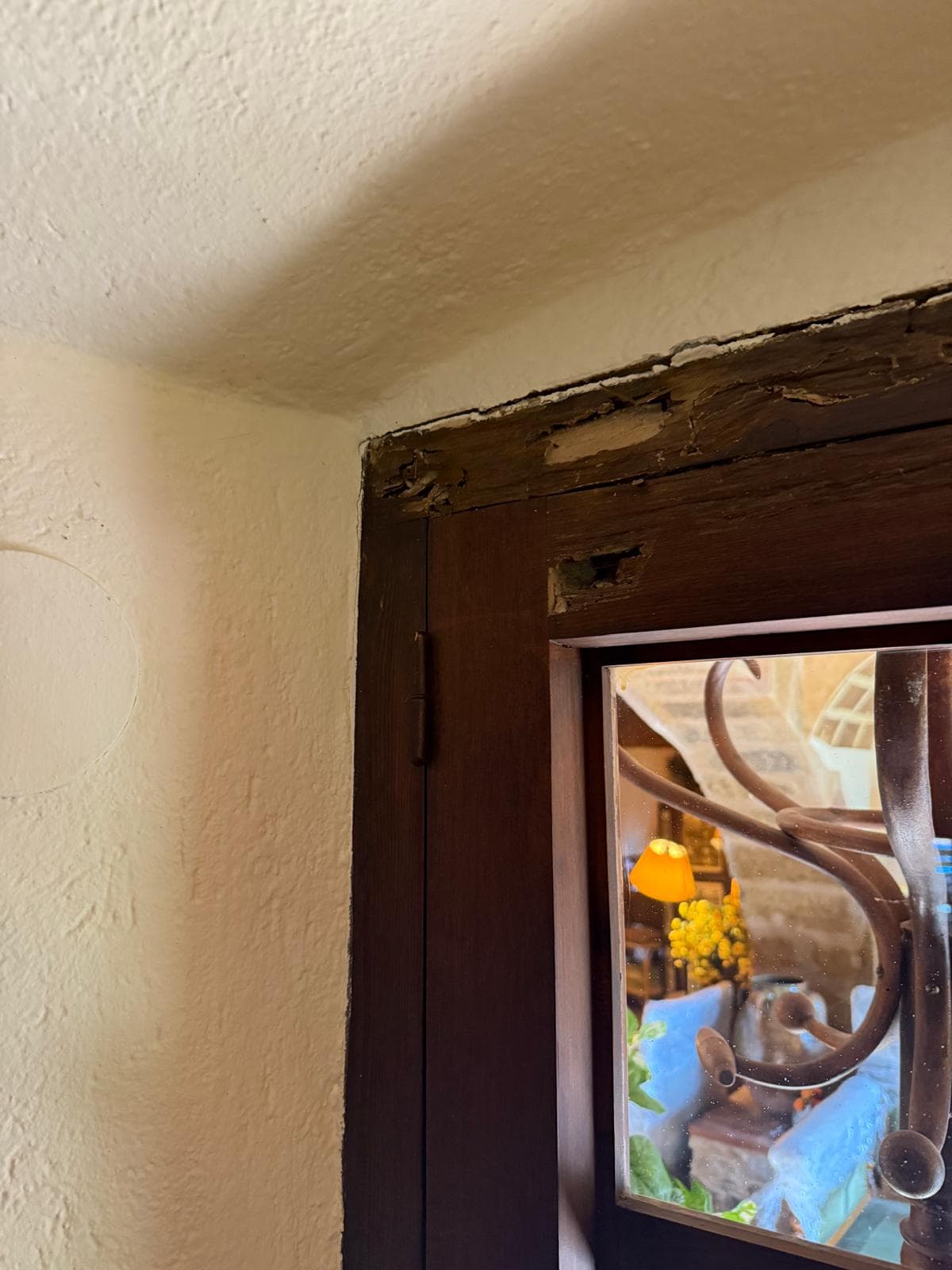
The termite eats the inside and spares a thin surface layer, so the element looks intact. Tap it with your knuckles and the sound changes from solid to hollow. On flooring it feels like a board that gives underfoot.
When do termites fly in Sitges?
In Sitges the wings of the swarming flight appear with the first mild spring evenings, on the balconies of the old town and the window sills of Sant Sebastià, and warn that a mature colony is prowling nearby.
Activity: from March to June · Peak: April and May.
Drywood termite Kalotermes flavicollis
Activity: from August to October · Peak: September.
Highest chance of seeing them
Active period
No flight expected
These dates are indicative windows. Flight depends on temperature and humidity, so each year it starts earlier or later: if you see winged insects outside these months, it is still a reason for an inspection.
Source: Technical literature of the timber sector · retrieved on 21 July 2026.
The bait system
We start by listening. The audiotermes amplifies the sound inside the wood and locates activity without lifting the floor or drilling anything, and from that comes a floor plan of the property with every point of damage marked.
Then the stations go in. We place indoor bait stations over the located sources and outdoor bait stations spread around the building's perimeter, loaded with bait for subterranean termites, a TP8-type biocide. The perimeter barrier is the part most providers skip, and it is the one that reaches the whole colony.
From there it is a matter of checks: every station is monitored, the bait replenished and the activity recorded until the nest stops responding. There is no shortcut, and anyone promising eradication in one visit is not talking about subterranean termites.
We publish the real timescales because they pre-qualify better than any promise. If someone wants a fix in one afternoon, better they know before calling.
Total duration:Periodic checks every 6 to 8 weeks, until activity ceases completely
1
Included
Visual assessment visit
A walk through the property with the naked eye to see what there is and how far it goes. The assessment visit is included, at no cost and with no obligation, and it is the starting point when the signs are unclear.
2
1 working day, with the figure agreed first
Technical study
Percussion sounding, listening with audiotermes, species identification and location of the access routes from the ground. We always recommend it: it confirms every point of damage and decides where each bait station must go. It is quoted separately, so you see it with the scope in front of you and it starts when you say yes.
3
A few days later
Report and floor plan
Floor-by-floor plan of the property with the issues found, the extent of the damage and the treatment proposal with your written quote. It is part of the technical study.
4
1 working day
System installation
Placement of the indoor bait stations over the sources and of the outdoor perimeter barrier around the building.
5
Every 6 to 8 weeks
Monitoring checks
Check of every station, bait replenishment and activity record. The frequency adjusts to what the system shows.
6
6 to 12 months
Eradication of the nest
The timescale depends on the size of the colony. It is the real range of the bait system and it cannot be compressed.
7
3 years
Guarantee
Three years from eradication, with the annual inspection included at no cost.
The visual assessment visit is included, at no cost and with no obligation: when the signs are unclear, it is the way to clear doubts. Even so, we always recommend the technical study with audiotermes, a floor plan of the issues found and a report, which is quoted separately: it confirms every point of damage, fixes where the treatment must act and from it comes your written quote, so you decide with the figure in front of you.
Source: ERRADICAT's intervention protocol · retrieved on 4 September 2026.
What we get asked in Sitges
I have an indiano house in Sitges with the original balconies and galleries. Does the termite treatment mean removing wood?
No: in Sitges the bait system is designed for exactly the opposite, so that the good wood stays. The stations with TP8 biocide are placed at discreet points indoors and around the perimeter, the termites carry the bait back to the nest and the original joinery stays out of the whole process. Prior detection with audiotermes points out which pieces have activity, so not one balcony is taken down and not one door is replaced because of the treatment.
My house is in the old town of Sitges, wall to wall with the neighbours. Is there any point in treating only mine?
Yes, because the bait system we install in the old town of Sitges does not just defend one wall: it acts against the entire colony. The nest lives in the ground and feeds galleries that cross the party walls, so when the stations start working the pressure drops in the adjoining properties too. Even so, if signs are seen in the house next door, it is worth checking it soon: the sooner the source is contained, the better for the whole block.
In Terramar we water the garden almost every day. Does that attract termites?
Yes: in Terramar and in the housing estates opening out towards Sant Pere de Ribes, garden watering keeps the perimeter of the houses damp all year round, and that is the easy route the subterranean termite takes advantage of. That is why in villas with a plot the system includes outdoor stations buried in the garden, checked regularly, and a close look at pergolas, porches and any wood resting on the soil: that is where the activity shows first.
I have seen small holes and sawdust in a beam of my house in Sitges. Is it woodworm or termites?
They are not usually termites: in Sitges small holes with fresh frass in a beam point to woodworm, which bores through the surface on its way out. The subterranean termite works differently: it leaves no clean holes and no frass, it advances under cover and the beam loses substance without changing its face. Since both can coincide in old ceilings, a piece-by-piece check and listening with audiotermes clarify what each element has and avoid treating blind.
Can I ask for a single check that looks at termites and woodworm at the same time in my house in Sitges?
Yes, and it is what we recommend in Sitges when the house holds old joinery: a technical study that goes over all the wood and assesses each pest separately within the same document. That is how it was done in neighbouring Vilanova i la Geltrú, and the result was a clear proposal for each problem, without mixing methods or timescales. The technical study also brings the written quote with it, so the decision is taken with all the information in front of you.
How far do we travel from Sitges?
In Sitges we cover the whole municipal area, including the old town, Sant Sebastià and Terramar, and we also reach Vilanova i la Geltrú, Sant Pere de Ribes and Castelldefels. We work Monday to Saturday, 7:30 to 22:00.
·If you are still unsure what you have, the visual assessment visit is included: no cost and no obligation.
·With signs in front of you, we recommend the technical study with audiotermes, floor plan and report: it confirms every point of damage, decides where each bait station goes and from it comes your written quote. It is quoted separately and starts when you say yes.
·During the bait programme our technicians return every 6 to 8 weeks, and those checks are part of the treatment.
·And if your property sits right on the edge of the area, we confirm it by phone in the same call.
Sitges shares the Garraf county and the same kind of old housing with Vilanova i la Geltrú, and that is where the work this page tells of comes from: a single technical document covered the woodworm in the beams and the termite prevention of one house.
Sitges has the Garraf massif at its back and Castelldefels waits just on the other side, with a different setting: detached houses with gardens on the sand of the delta, where the damp from watering reaches right up to the foot of the walls.
The ROESP is the Spanish official register of pesticide establishments and services. It is the legal requirement for applying professional-use biocides, and not everyone offering these treatments meets it.
Technicians by trade, since November 2011
The technician who signs the reports, Sergi Casadevall Casas, has been treating termites and woodworm in Barcelona and Girona since November 2011, holding the biocide applicator licence. Visits are always made by our technicians, never by salespeople.
Written guarantee
The conditions and timescales go in the intervention report, signed. For termites, 3 years from the certificate of colony elimination, with the annual inspection included at no added cost.
The floor plan and the report stay with you
The technical study ends in a floor-by-floor plan of the property, with the issues found marked and the real extent of the damage. It is quoted separately and the document stays in the owner's hands, to work with the architect or to seek a second opinion with data on the table.
Barcelona and Girona under the same registration
Spanish Royal Decree 830/2010 establishes that a pest-control company's registration in one autonomous community is valid to work in the rest. That is why we cover both provinces with the same registration and the same team.
Content of this page reviewed by our technicians on 4 September 2026.
What happens when you call us from Sitges
We ask what you have seen and where. If the signs are unclear, we book the visual assessment visit, which is included and takes little time. And when the signs are there, what we recommend is the technical study: audiotermes, a floor plan of the issues found and a report, with your written quote so you decide with the figure in front of you. If the wood is healthy, we tell you that too: you save yourself the treatment.
The visual assessment visit is included, at no cost and with no obligation: when the signs are unclear, it is the way to clear doubts. Even so, we always recommend the technical study with audiotermes, a floor plan of the issues found and a report, which is quoted separately: it confirms every point of damage, fixes where the treatment must act and from it comes your written quote, so you decide with the figure in front of you.