It is the question we get asked most: how much does it cost to hire a pest control service? The honest answer is that there is no single flat rate, and you should be wary of anyone willing to quote a fixed price over the phone without having seen the problem. It comes down to the pest, the real extent of the infestation and the method needed to sort it out for good. In this guide we walk through what the price depends on, what a professional treatment actually includes, and why at ERRADICAT the visual inspection is always free and with no obligation across Barcelona and Girona.
Why is there no single price for pest control?
Two homes with the same pest can need completely different treatments. A kitchen with its first few cockroaches is a world away from an entire building that has already been colonised, and a beam with a little surface woodworm is nothing like a structure riddled with termites. Before anyone talks money, a technician has to see the source, gauge how far it has spread and choose the method. That is why the first step is always an inspection: without one, any figure is plucked out of thin air. Quoting blind is the quickest route to a nasty surprise on the invoice, and we do it the other way round.
What the price of a pest treatment depends on
These are the factors that genuinely move a quote. If you are gathering several offers, make sure they all cover the same ground:
| Factor | How it affects your treatment |
|---|---|
| Type of pest | Each one (cockroaches, termites, bedbugs and so on) calls for its own method and its own products. |
| Severity of the infestation | A fresh outbreak is dealt with sooner, and with less product, than a pest that has already spread through the property. |
| Floor area and access | A flat is not the same job as open-plan premises or a block of flats with plenty of communal areas. |
| Number of visits | Some pests are sorted in a single visit; others, bedbugs among them, need several passes. |
| Method and product | Acoustic detection with AUDIOTERMES or long-term baiting does not cost the same as a one-off spray. |
| Urgency | A same-day call-out, at the weekend or on a bank holiday, means sending our technicians out as a priority. |
None of this is arbitrary: the price reflects exactly what it takes to make sure the pest does not come back. That is why we always pin it down after the inspection, with everything on the table and in writing.
Is a professional worth it compared with home remedies?
The supermarket spray and a couple of traps look like the cheap way out, and that is precisely the catch: they almost never fix the problem. A shop-bought insecticide kills the insects it lands on, but it never reaches the nest or the eggs, which is where the battle is actually won or lost. Cockroaches are a perfect example. A single female German cockroach can produce tens of thousands of offspring in a year, so killing the ones on show changes nothing: the colony carries on behind your furniture, untouched.
It nearly always ends the same way. You spend on one product after another, the pest keeps growing, and in the end you call a professional regardless, only now the infestation is bigger and harder to treat. Getting it right first time is the most cost-effective option, not the dearest. A professional treatment tracks down the sources, uses professional-grade products that actually reach the nest, includes follow-up and, where the service allows it, a written guarantee.
The cost of not acting in time
Set the price of a treatment against the cost of letting the problem drag on, and the scales tip on their own. A pest left alone does not sit still: it grows, it spreads and it starts to cost real money.
- Structural damage: in Spain, termites are blamed for an estimated more than 100 million euros in damage every year (source: ANECPLA). Repairing a timber structure that has been hollowed out costs far more than treating the colony while there is still time.
- Legal penalties: a bar or restaurant without an up-to-date pest control plan risks steep fines and even closure of the premises. We go into this in our guide to pests in restaurants and the rules around them.
- Reputation and health: a visible pest drives customers away from a business and, at home, it takes a toll on the family's rest and health. Winning that trust back is hard to put a figure on at all.
When is it compulsory to hire pest control?
In some situations, professional pest control is not a choice but a legal requirement:
- Restaurants, bars and food premises: they need a current DDD plan as part of their APPCC system.
- Hotels and tourist accommodation: obliged to keep an active pest control plan running.
- Residents' associations: rodent control in shared areas (basements, car parks, bin stores) falls to the association, as we explain in our guide to the obligations of residents' associations.
- Food industry: factories, warehouses and distributors have to meet strict, certified pest control protocols.
How to pay less for your pest treatment
You do not need a price list to know there are ways to keep your quote down. These are the ones that genuinely make a difference:
- Act quickly: with every week that goes by, the pest spreads and the treatment gets trickier. Catching it early is always the simplest and most affordable option.
- Choose maintenance: for businesses and residents' associations, an annual plan with scheduled visits works out better value than calling someone out in a panic time and again, and it keeps reinfestations at bay.
- Compare properly: get several assessments, but check that the company is on the ROESP register and uses authorised products. A bargain that does not solve the problem turns out to be the priciest option of all.
- Prevent: good hygiene, sealing up cracks and sensible waste management cut the risk of a pest dramatically, and with it the need for treatments.
What makes a timber treatment quote vary
Timber is where two quotes that look alike drift furthest apart. It is not the whim of whoever signs them: they are measuring different things. These are the four factors that genuinely move the figure.
- Linear metres of beam and joist. You do not pay by the property, you pay by the affected timber. Before anyone gives a number, it has to be measured, beam by beam.
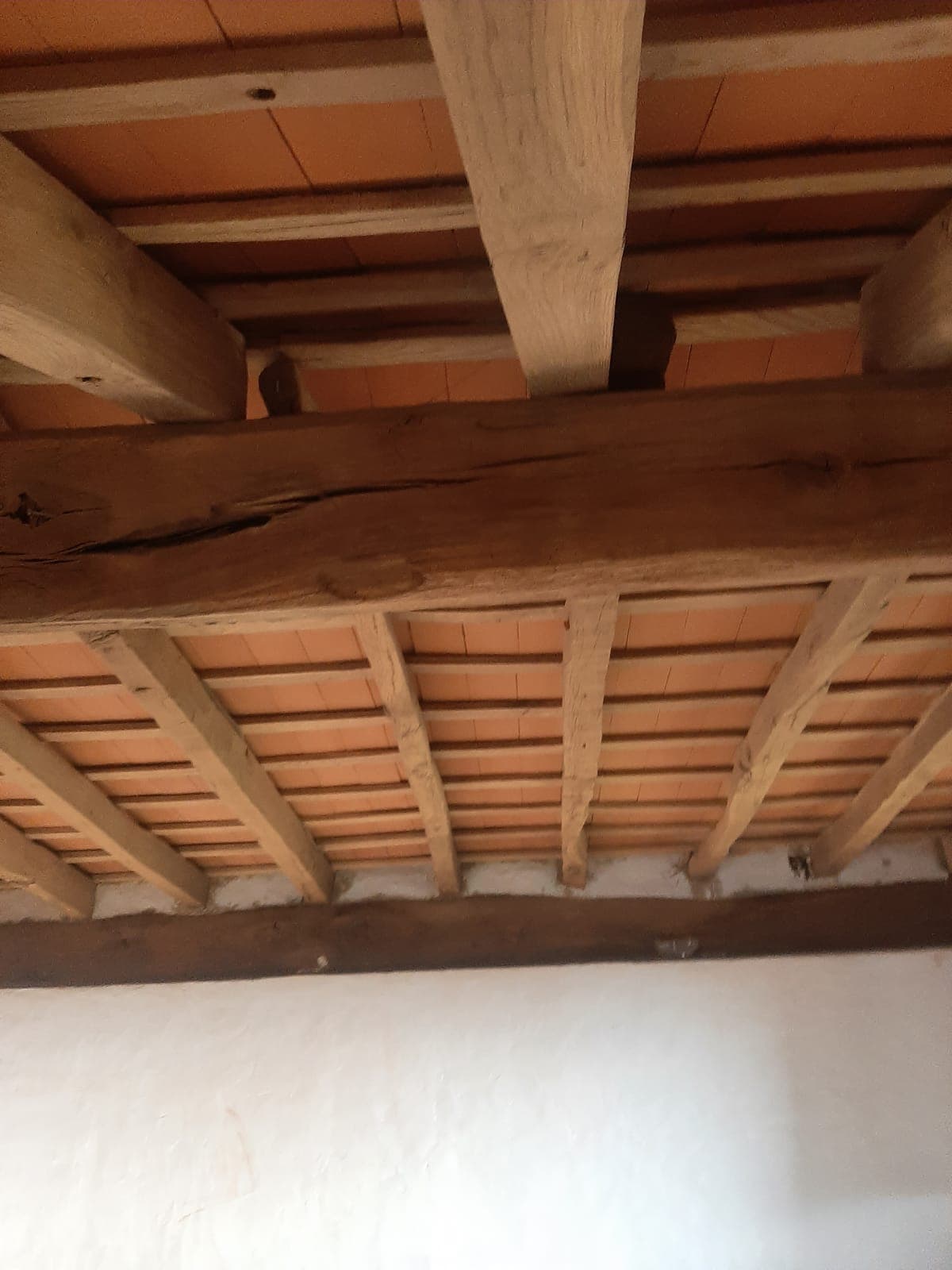
- Access. An exposed beam is treated directly. The same beam under a false ceiling, lime render or parquet means stripping or opening test areas first, and that is work before the treatment.
- Number of bait stations. With subterranean termites they go in according to the activity points found and the real perimeter, not the floor area of the house.
- Type of floor structure. An oak-beamed floor in a farmhouse behaves nothing like an eixample joist or a fisherman's house frame. The method changes and so does the number of visits.
That is why the order matters: diagnosis first, then method, and only at the end the figure. If termites are suspected, the full protocol is on the termite treatment page, and the method by which a whole colony collapses is set out step by step in the bait system guide. If what you are seeing is exit holes and frass, the procedure is on woodworm treatment. And if building work is coming, read why it pays to inspect before renovating first: a renovation over attacked timber hides the damage instead of solving it.
Free, no-obligation quote
At ERRADICAT we would rather give you a fixed, honest price once we have seen your case than throw out a random figure that changes later. That is why the visual inspection is free and with no obligation, and your quote arrives closed and in writing: within 24 hours for urban pests, and, for timber, together with the report of the technical inspection, which is quoted separately. We are registered on the ROESP, we work with products authorised by the Ministry of Health, and we back the treatments that allow it with a written guarantee. Tell us what is going on and we will tell you exactly what you need. We work on site across the provinces of Barcelona and Girona; if your case is termites in the city itself, our termite treatment in Barcelona page covers the protocol applied to Barcelona's building stock, from the Eixample to the old annexed towns.