Getting rid of termites for good means destroying the whole colony, not just the insects you happen to see. The method that actually works, and the one we use at ERRADICAT, is the bait-station system: worker termites carry the bait back to the nest and pass it around the entire colony, queen and all, until the nest dies off. Shop-bought insecticides fail because the colony, hundreds of thousands or even millions of individuals, stays intact underground.
This article is about the method: how termites are actually wiped out, why baiting succeeds where other approaches fail, the scientific evidence behind it and how our step-by-step protocol plays out in Barcelona and Girona. If instead you want to identify an infestation, we have a separate guide on the warning signs of termites in the home.
Why shop-bought insecticides don't eliminate termites
It's the most common mistake, and the costliest. The moment someone spots termites, the instinct is to reach for a spray and douse the mud tubes or the damaged wood. The trouble is scale: a single subterranean termite colony can run to several million individuals, working around the clock, 365 days a year (source: Anticimex).
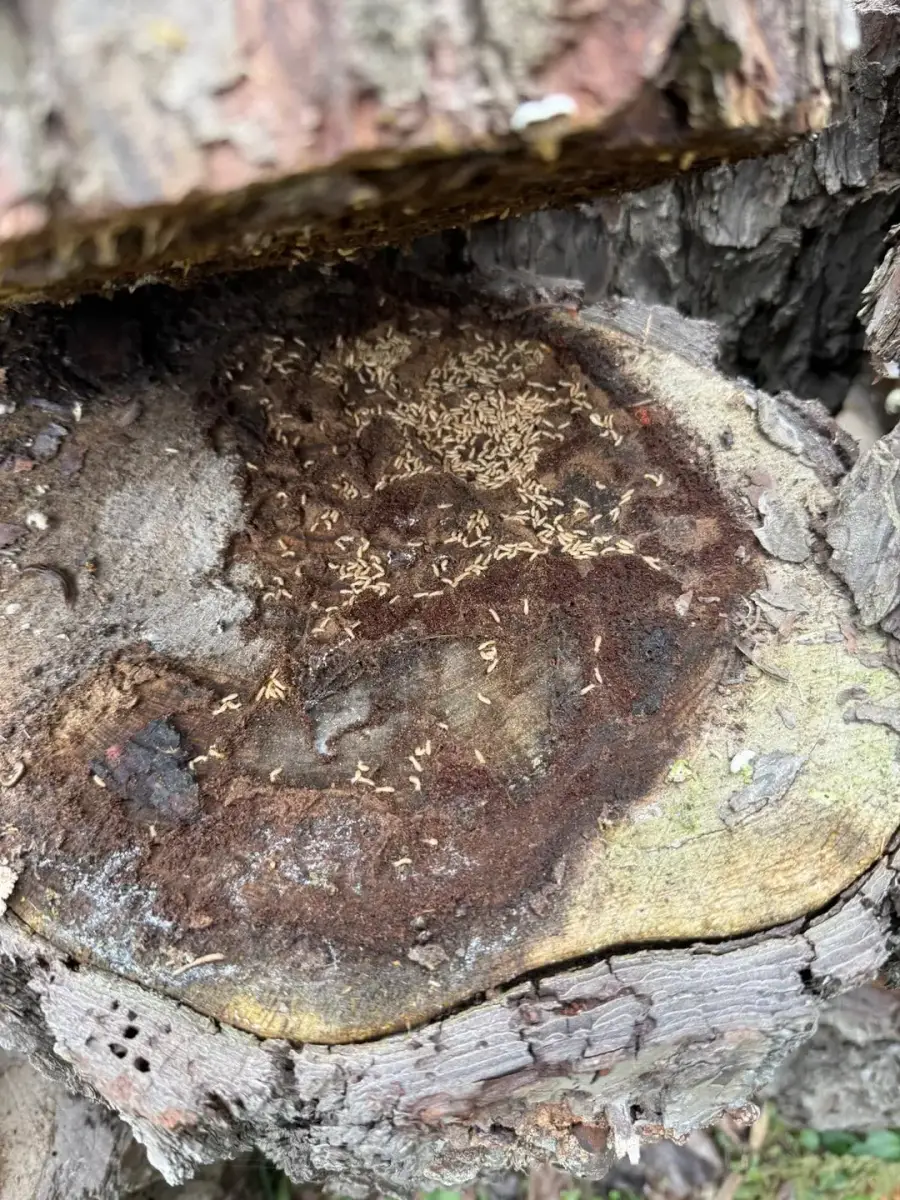
The spray kills a handful of workers that happened to be passing through. The queen, the bulk of the colony and the nest itself stay underground, sometimes metres from where the damage shows. Within days they surface somewhere else. Worse, repellent products can signal to the colony that an area is dangerous, prompting it to open fresh galleries elsewhere and spread the attack.
This is no fringe problem in Spain. The subterranean termite (Reticulitermes spp.) turns up in 80% of the country's municipalities (source: ANECPLA / IPNA-CSIC). Far from a rarity, it is the dominant timber pest.
What the baiting system is and how it works
The baiting system, also called the bait-station system, turns the termite's own social biology against it. Instead of picking off insects one by one, it makes the colony the agent of its own destruction.
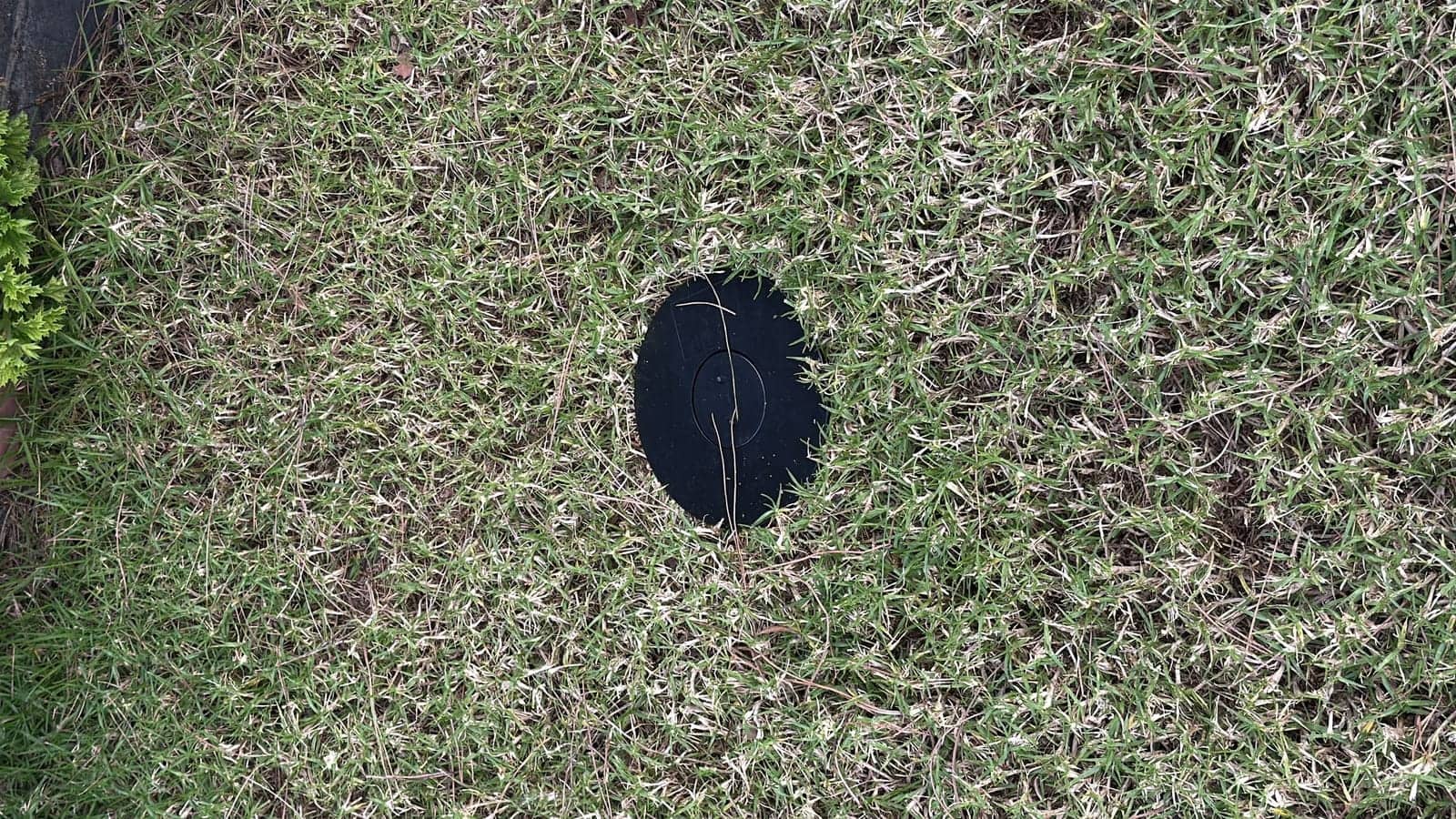
A bait station is a unit holding a cellulose matrix laced with a slow-acting active ingredient. We install them at the points of activity, indoors and out. Workers find the bait, feed on it and carry it back to the nest. This is where the so-called colony effect kicks in:
- Spread through trophallaxis: termites feed one another mouth to mouth, so the bait travels through the entire colony.
- Slow, silent action: the active ingredient neither repels nor kills on contact, so workers keep ferrying it to the nest without raising the alarm.
- Chain collapse: as the active ingredient takes hold among the workers, the population crashes, the queen is left without food and the whole nest dies.
That's the crucial difference from any contact method: the bait reaches where you can't, right into the heart of the nest. It's why baiting is now the technical standard for subterranean termites in towns and cities, having displaced the old chemical barrier injected into the ground, a far more invasive approach.
What scientific evidence backs the baiting system
This isn't marketing: the method has more than twenty years of proven results in Spain. A study co-led by IPNA-CSIC and published in the Journal of Economic Entomology confirmed the complete eradication of subterranean termite colonies (Reticulitermes) in urban centres, keeping those areas pest-free across more than two decades of follow-up (source: IPNA-CSIC · Journal of Economic Entomology).
There are two practical lessons here. First, this success doesn't hinge on a miracle product but on a rigorous protocol for application and monitoring. Second, the pace is set by how quickly the bait spreads through the colony until it collapses: in our own work, the nest is usually considered eradicated between 6 and 12 months into treatment.
How we detect activity without breaking anything: AUDIOTERMES
Before you can treat, you have to know where the termite is, and there's the rub: it eats wood from the inside out and leaves almost no visible trace until the later stages. By the time the damage shows, the colony has often been active for years.
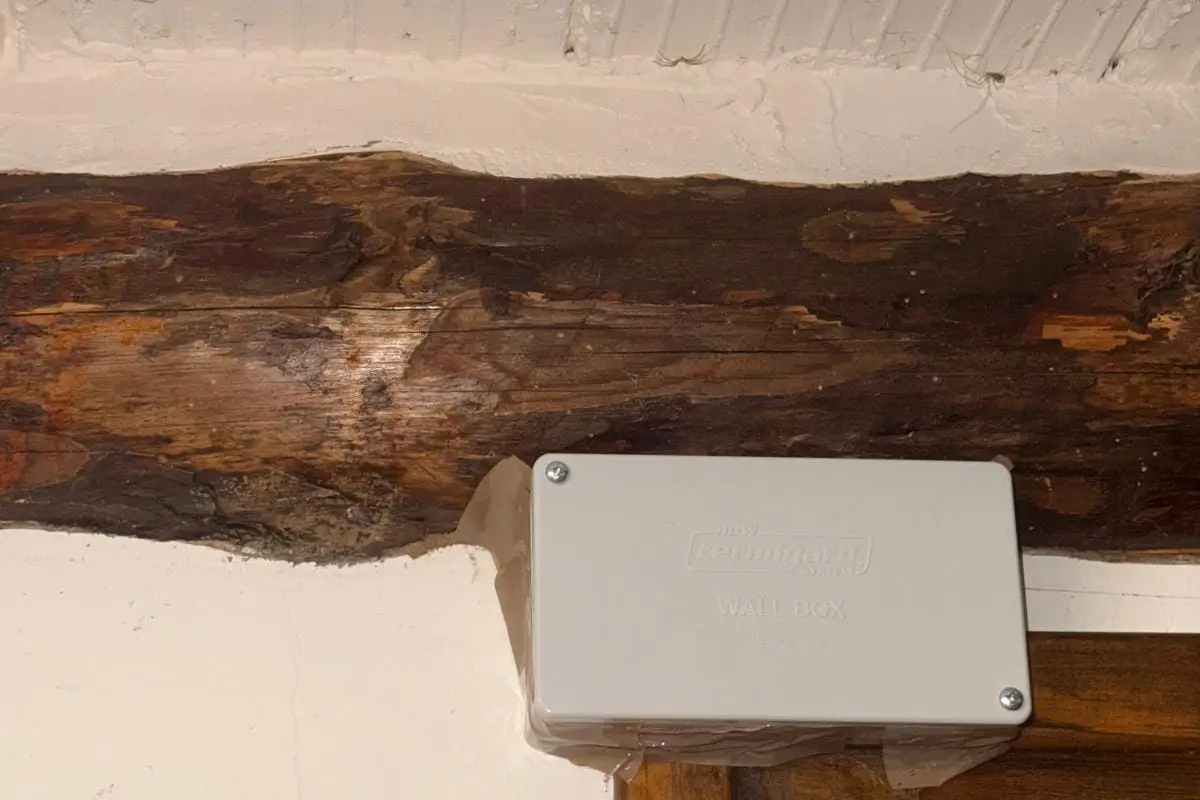
To pinpoint that activity without tearing anything apart, we use AUDIOTERMES, a device that amplifies the sound termites make as they chew away inside the wood. It lets us find active colonies in beams, beam ends and joinery where nothing is visible to the naked eye. We round off the inspection with a check of the exterior and a test bore at the beam ends, always without chipping away walls or dismantling structures.
Don't confuse termites with woodworm, because the treatment isn't the same. Termites devour everything and leave no sawdust behind; woodworm leaves round holes and little piles of sawdust on the surface of the wood. If it's that other pest you're worried about, see our guide to getting rid of woodworm in timber and the woodworm treatment page. For the visible signs of termites (swarmers in spring, shed wings, mud tubes), have a look at our warning signs guide.
The ERRADICAT protocol step by step
Our termite treatment always runs through the same three phases. No building work, no nasty surprises and a clear report from day one.
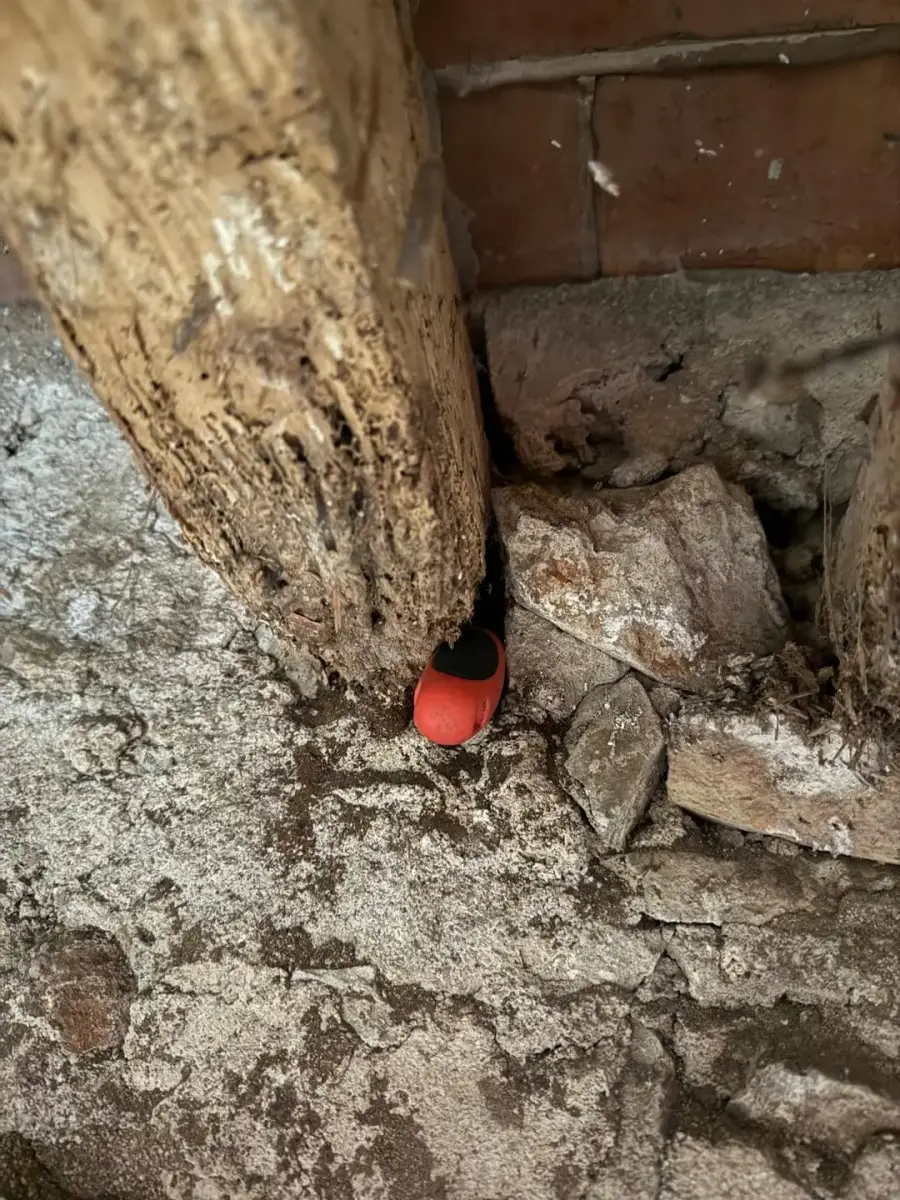
- Advice and inspection. A technical visit with a floor plan of the property and a report on how far the damage has spread. We inspect with AUDIOTERMES to find the hidden activity, check the exterior and take a test bore at the beam ends, all without destructive building work.
- Tailored solution. We place the bait stations in the affected areas, indoors and out. Workers carry the bait back to the nest and share it around the whole colony, queen and all. We check the stations every 6 to 8 weeks, depending on the activity we record.
- Eradication and protection. Treatment runs between 6 and 12 months depending on the size of the nest, until it is completely wiped out. From that point on, the guarantee and monitoring take over.
The timescales aren't arbitrary: clearing an entire colony takes time because the bait has to work its way through the whole population before it collapses. How involved the treatment is depends on the size of the nest and the number of stations; if you'd like a rough idea of the cost, see our guide on how much a pest control treatment costs. Anyone promising to rid you of termites in a week isn't eliminating the colony, only killing what happens to be on show.
Baiting system versus insecticide and chemical barrier
This table sums up why baiting is the benchmark choice against the alternatives.
| Criterion | Baiting system (ERRADICAT) | Shop-bought insecticide | Chemical barrier in the ground |
|---|---|---|---|
| What it eliminates | The whole colony, queen and all | Only the individuals sprayed | Creates a barrier, doesn't always kill the nest |
| Colony effect | Yes, through trophallaxis | No | No |
| Building work / invasiveness | None, non-destructive | None | High, injection around the perimeter |
| Timescale | 6 to 12 months to eradicate | Reappears within days | Variable |
| Long-term evidence | 20+ years (IPNA-CSIC) | None | Depends on the product |
| Guarantee | 3 years from the certificate of colony elimination, plus an annual inspection | No | Depends on the company |
Realistic treatment timeline
So you know what to expect month by month, here's the rough pace of a typical job. The exact schedule bends to whatever activity we record at each check.
| Phase | When | What we do |
|---|---|---|
| Inspection | Day 1 | Floor plan, damage report and AUDIOTERMES detection |
| Installation | Week 1 | Bait stations placed at the points of activity |
| Monitoring | Every 6 to 8 weeks | Checking stations, measuring consumption and topping up |
| Eradication | Months 6 to 12 | Confirming the colony has been wiped out |
| Guarantee | 3 years from the certificate of colony elimination | Cover if it returns, plus a free annual inspection |
3-year guarantee and follow-up prevention
Once we consider the nest gone, the protection carries on. We give a 3-year guarantee from the certificate of colony elimination: if activity comes back, we cover the fresh placing of baits at no cost. Across those three years we also run a free annual inspection to confirm the property is still clear.
Eradication is also the ideal moment to shut the door on future colonies. We suggest two preventive measures:
- Replace vulnerable materials: switch wooden frames and windows for aluminium at the points of risk.
- Keep damp in check: the subterranean termite needs moisture and contact with the ground, so sorting out leaks and damp is central to keeping it away.
One statistic explains why this matters so much in older housing: more than 90% of buildings put up before 1920 have a timber structure (source: ANECPLA). In the historic centres of Barcelona and Girona, that heritage is exactly what the termite is after.
Why it pays to act as soon as you suspect something
The Mediterranean climate, humid with mild winters, suits the subterranean termite (Reticulitermes spp.), the commonest and most destructive species in our area. To spot the first signs of an infestation before the damage becomes visible, take a look at our guide to the warning signs of termites in the home.
The rule of thumb is simple: the sooner it's caught, the cheaper and quicker the fix. Every month a colony stays active means more wood lost and more structure weakened. That's why early detection is decisive, and why our inspection always comes with no obligation. And if you're mulling over a renovation, read our guide on termites or woodworm before renovating first: the work can scatter the colony and leave the damage hidden behind the new cladding.
Request your no-obligation inspection
At ERRADICAT our technicians have 15 years of experience treating termites across Barcelona and Girona. We're a company registered with the ROESP, our technicians hold a biocide applicator licence in line with Reglamento (UE) 528/2012, and we use products authorised by the Ministry of Health. If you suspect termites in your home or your building, request a no-obligation visual inspection: we come out and, if needed, we quote the AUDIOTERMES detection separately, with a report and floor plan, and explain exactly what your property needs. See everything our termite treatment covers.