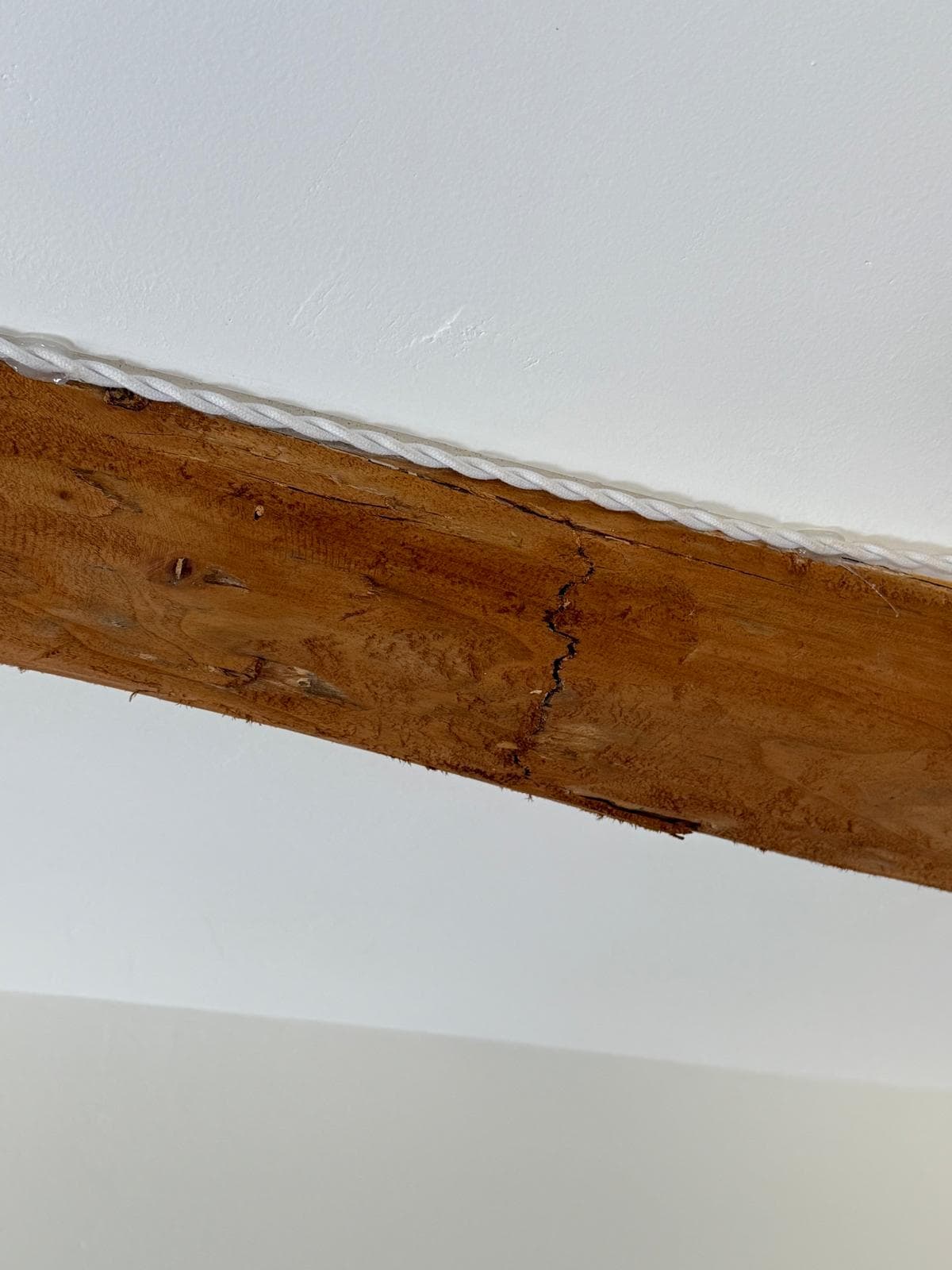
Of all the insects that can invade a home, termites are the most destructive. They work in silence, hidden away inside the wood, and by the time you notice them the structural damage may already be severe. Barcelona and Girona give them precisely the Mediterranean climate they thrive in, which is why infestations here are far more common than most homeowners imagine.
What are termites, and why are they so dangerous?
Termites are social insects that feed on cellulose, the main component of wood. A single colony of subterranean termites can number anywhere between 100,000 and several million individuals, and it eats wood 24 hours a day, 365 days a year.
A few things make them particularly dangerous:
- They work from the inside out: they hollow the wood out from within and leave only a thin outer skin untouched. A beam can look perfectly sound from the outside and be all but empty within.
- They give nothing away: unlike woodworm, they make no noise you can hear and leave no visible sawdust.
- The cost runs into the millions: across Spain, termite damage is put at more than 100 million euros a year (source: ANECPLA), and a colony left untreated can compromise the structural integrity of an entire building.
Termite species found in Catalonia
Around Barcelona and Girona, two species account for the bulk of what we see:
- Subterranean termite (Reticulitermes grassei): the most common and most destructive in Catalonia. It nests in the ground and reaches timber structures through mud tunnels it builds along walls and foundations. Nothing is safe from it, from centuries-old houses to new builds.
- Drywood termite (Kalotermes flavicollis): less common, though a familiar face along the coast. It nests straight inside the wood and needs no contact with the ground, going after furniture, door and window frames, and beams.
Warning signs: how to spot termites
Catching termites early can save you thousands of euros in repairs, so keep an eye out for the following:
- Mud tunnels on the walls: slender earthen galleries, 5 to 10 mm across, running over walls, foundations or pillars. This is the surest sign of subterranean termites.
- Timber that sounds hollow: tap a door frame, skirting board, beam or piece of furniture, and if it rings hollow or sinks under light pressure, termites may have eaten it out from the inside.
- Doors and windows that stick: as termites devour the frames from within, the wood warps and things stop closing as they should.
- Swarms of winged termites: in spring, from March to May, mature colonies release winged reproductives that pour out in large groups, drawn to the light. Transparent wings left on the floor near a window are a clear giveaway.
- Cracked or blistered paint: the moisture termites give off as they feed can leave paint cracking, flaking or bubbling on walls and frames.
- Tiny faecal pellets: drywood termites push out droppings as small six-sided, wood-coloured grains that gather in little heaps beneath the infested area.
Differences between termites and woodworm
It pays not to confuse the two, because each one calls for a different treatment:
| Feature | Termites | Woodworm |
|---|---|---|
| Visible sawdust | No, they eat the lot | Yes, small piles of fine dust |
| Holes on the surface | None or barely any | Small round holes (1 to 3 mm) |
| Noise | Silent | A faint crackling you can hear |
| Speed of destruction | Very fast, the whole colony at once | Slow, individual larvae |
| Contact with the ground | Yes, subterranean | Not needed |
Professional treatments against termites
Getting rid of termites is never a DIY job; it always takes professional intervention. These are the methods that genuinely work:
- Baiting system (bait stations): stations loaded with slow-acting toxic bait are placed around the perimeter of the building and wherever there is activity. Worker termites carry the bait back to the nest and pass it through the whole colony, the queen included, until the entire nest dies off. It plays out over 6 to 12 months and is the most effective, least invasive option for subterranean termites; we set it out step by step in our guide on how to eliminate termites with the baiting system.
- Chemical barrier treatment: a termiticide is injected into the ground around and beneath the foundations to lay down a barrier the termites cannot cross. It is the classic method and the most invasive of the four, because it means opening up the perimeter ground. At ERRADICAT we do not apply it: the bait reaches the whole colony without touching the foundations.
- Wood injection: for drywood termites, insecticide is injected straight into the galleries of the affected timber.
- Preventive wood treatment: protective products are applied to new or restored timber to head off future attacks.
Important: household insecticides do nothing against termites. They only kill the few you spray, while the colony of hundreds of thousands carries on untouched underground.
What to do once you confirm you have termites
At ERRADICAT we specialise in termite detection and removal: we pinpoint the activity with AUDIOTERMES and wipe out the colony with TP8 biocide bait stations, placed at the points of activity and around the perimeter of the building, with a 3-year warranty from the certificate of colony elimination and the annual inspection included. Ask for a visual inspection visit, which is included and carries no obligation, and we will tell you what we see. And if a renovation is what has brought you here, do not begin it without a proper diagnosis first: we explain why in our guide on termites or woodworm before renovating.